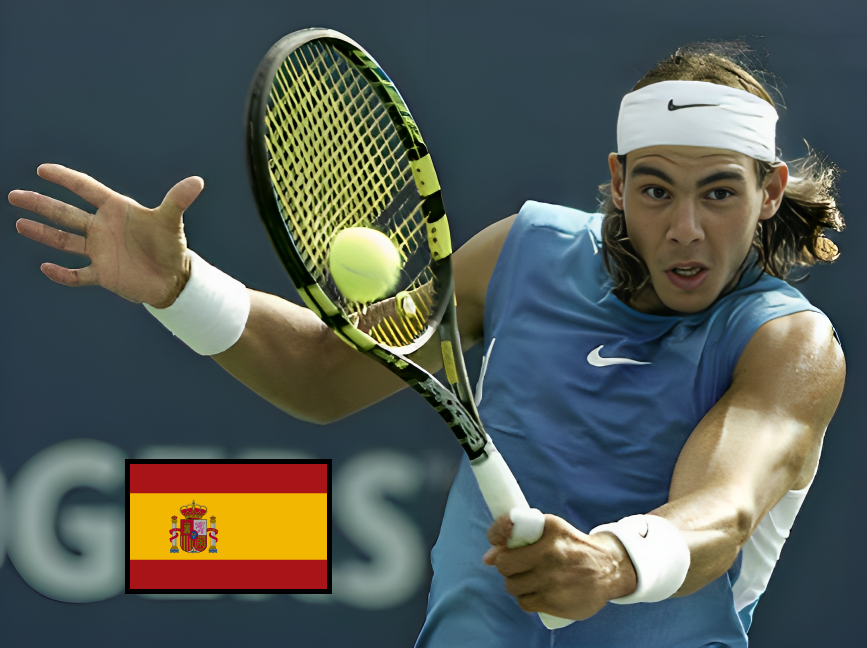
Born: June 3, 1986 in Manacor (Mallorca)
Height: 1.85 m
Plays: Left-handed (two-handed backhand)
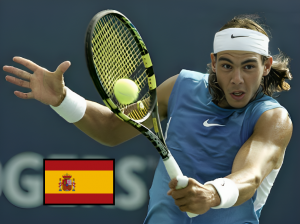 September 11, 2001, popularly known as 9/11, is a memorable date for the Western world, especially the United States, due to a series of four coordinated terrorist attacks that claimed nearly 3,000 lives. Interestingly, it also marks a special moment in Nadal’s tennis career. On that day in Madrid, a 15-year-old boy with a fringe, then known as Nadal-Parera played his first professional match at the Futures level. Facing Guillermo Platel, a compatriot seven years his senior who never won a Challenger-level match, Nadal lost in dramatic fashion an opportunity to enter the ATP ranking: 6-2, 5-7, 2-6, squandering an astonishing number of 13 match points. It was a heart-breaking start for the promising youngster from the largest Balearic Island.
Earlier that year, Nadal’s talent had begun to draw attention. In May, during an exhibition in Mallorca, he stepped in for his mentor, Carlos Moyá, and defeated former Wimbledon champion Pat Cash, who had only retired a few years before. Despite this impressive feat, the loss to Platel reflected Nadal’s initial struggles with mental toughness. Over the next few years, his early career was marked by several missed opportunities. Already after his first 24 main-level events he had lost three matches wasting multiple match points, at one occasion he couldn’t have closed a set leading 5:1, succumbed three matches “0-3” losing two tie-breaks, and twice was defeated despite leading 5:2* in deciding third sets.
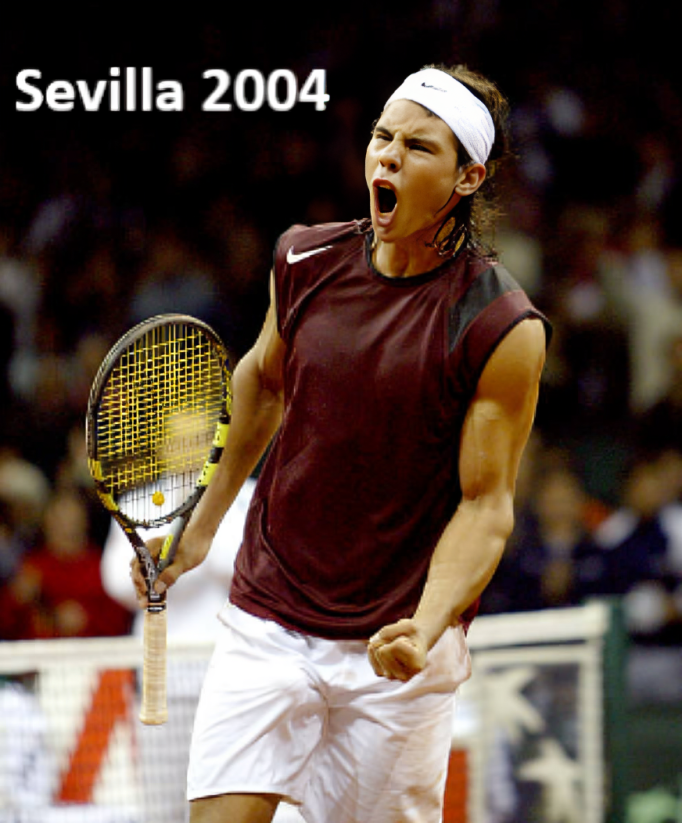
At age 18.2, Nadal claimed his first ATP title in a Polish seaside city of Sopot, though the competition wasn’t particularly fierce. Months earlier, he had shocked the tennis world by defeating Roger Federer 6-3, 6-3 in Miami, signalling his enormous potential. However, his inconsistency in clutch situations remained a concern. A turning point came during the Davis Cup ’04 final. Representing Spain against the United States, Nadal faced Andy Roddick in front of a record crowd of 27,200. Roddick, then a top player and tie-break ruler, had crushed Nadal earlier that year at the US Open. Yet Nadal rose to the occasion, winning in four long sets, with the pivotal third ‘tie-break’ set featuring 20 deuces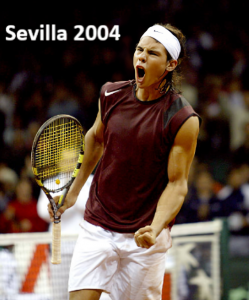 in nine games. Moyá, who had mentored Nadal, remarked: “He’s the kind of guy who thrives in these kinds of matches. I really trust him.” This win elevated Nadal’s confidence and accelerated his development. Spain claimed the trophy for the second time in four years (for the first time in 2000 when 14-year-old Nadal was a flag bearer), and Nadal was a national hero even though he didn’t win a clincher. He would help Spain to win the Davis Cup a few more times, the most satisfied moment probably came in 2011 as he clinched the tie against Juan Martín del Potro after a rubber on super slow clay where the serve didn’t really mean anything.
In 2005, holding a black-yellow Babolat racquet, wearing sleeveless shirt Nike and excessively long shorts (he stuck to these two brands throughout his career), he won back-to-back titles for the first time (Costa do Sauípe, Acapulco) before losing the Miami final to Federer, despite being close to beat the best player in straight sets again! After that unfortunate final, Nadal began showcasing his dominance on clay, capturing titles in Monte Carlo, Barcelona, and Rome in quick succession. His Roman victory, following an epic battle against Guillermo Coria, cemented his status as the inevitable clay-court king. [ He went two years without a loss on this surface before Federer ended his 81-match winning streak in Hamburg ’07 ] By May 2005, he rose from world No. 51 to No. 5 within five months, becoming the first debutant to enter the French Open as a favorite. Living up to expectations, Nadal won Roland Garros without dropping two sets to any opponent, beating Federer in the semifinals turning 19, and drugged Mariano Puerta in the final two days later. It was clear that Nadal had emerged as Federer’s most formidable rival, surpassing other top players like Lleyton Hewitt, Marat Safin and Roddick. No other 18-year-old boy reached such a high level of play since the second half of 1980s, when Boris Becker, Michael Chang and Andre Agassi took advantage of rapid advances in tennis racquet technology. Nadal was undoubtedly a novelty, exhibiting lateral movement behind the baseline and passion to fight not seen before.
The teenager from Mallorca didn’t stop there. Later in 2005, he won two significant hard-court titles in Montreal (outdoors) and Madrid (indoors), defeating several top-20 players. The veteran Agassi, after losing to Nadal in the Canadian Open final, stated: “I’ve never seen anyone move like that on a tennis court.” Nadal’s unparalleled athleticism, anticipation, and ability to hit winners from seemingly impossible positions set him apart. While his style, based on rather soft serving, extreme forehand top-spins, relentless defence and high-energy rallies, led many to believe his career would peak early, Nadal had other plans… He was only 21 years-old when he became arguably the best Spaniard in the Open Era with another two Parisian titles obtained in the finals against Federer (2006 and 2007), surpassing the achievements of Manuel Orantes (the best Spanish player of the 1970s) and Sergi Bruguera (the best of the 1990s). His improved volleying and left-handed slice serve, honed through doubles matches, made him increasingly versatile. He was regularly defeating Federer on clay (Rome ’06 their most exiting match on this surface) but narrowly lost to the Swiss in two Wimbledon finals (2006 and 2007).
Nadal displayed incredible patience and determination, continuously refining all aspects of his game. Over the years, he enhanced his serve, the net game, with his backhand volley being one of the greatest shots in tennis history in my opinion. He adapted his game to faster surfaces, adjusting his court positioning (standing closer to the baseline compared to clay), and developing an effective backhand slice. These adjustments paid off spectacularly in the third consecutive Wimbledon final against Federer. In an almost five-hour epic under fading light, Nadal defeated the Swiss master, overcoming the failure of losing chances to close it out in the third and fourth sets. This victory marked Nadal’s ascent to the summit of the tennis world, and his dedication was soon reflected in the ATP rankings. After claiming the Gold Medal at the Beijing Olympics, Nadal became the world’s best player at 22 years old (ATP awarded ranking points for the Olympics during three editions: Athens ’04, Beijing ’08, and London ’12) what led to the decision to play in shirts with sleeves; his first Grand Slam title in a more classic outfit came at the 2009 Aussie Open (he would win his first US Open title a year later). With these triumphs he exceeded Manuel Santana, the previous greatest Spanish player who’d reigned supreme in the mid-1960s.
More or less at the time Nadal reached the pinnacle, two slightly younger players, Novak Đoković and Andy Murray, began staking their claim among the strict elite. The Spanish left-hander defeated each of them in super tight Bo3 encounters, winning fewer total points (Madrid ’09 and London ’10), establishing his mental edge. The year 2008 marked the birth of the so-called “Big 4” (or “Big 3” without Murray), a rivalry that dominated tennis for eight consecutive years – unprecedented in its consistency. In 2016, this era faced a sudden twist as Nadal and Federer suffered injuries, with the Spaniard dropping to No. 9 and Federer to No. 17. Many believed their reign was over, but both staged incredible comebacks in 2017, reclaiming the top of the sport, meanwhile, ironically Đoković and Murray faced their own struggles with exhaustion and injuries.
In the 2000s, the Federer-Nadal rivalry captivated tennis fans, with Nadal ultimately holding a 24-16 Head-to-Head advantage (despite losing six of their last seven encounters, including their emotional final meeting at Wimbledon ’19). However, the Nadal-Đoković rivalry eventually surpassed it in longevity and competitiveness, stretching across 18 years and three decades. Their competition for historic supremacy began as early as Miami 2007, where Đoković defeated Nadal 6-3, 6-4 avenging two quick defeats, and communicating his intent to disrupt the Federer-Nadal indisputable dominance predicted two years earlier. Ultimately, Đoković edged the Nadal rivalry 31-29 (there was 4:14!), thanks to their final encounter at the 2024 Paris Olympics, where the Serb demolished his toughest rival 6-1, 6-4 (briefly losing focus and conceding four games in a row leading 4:0 in the second set).
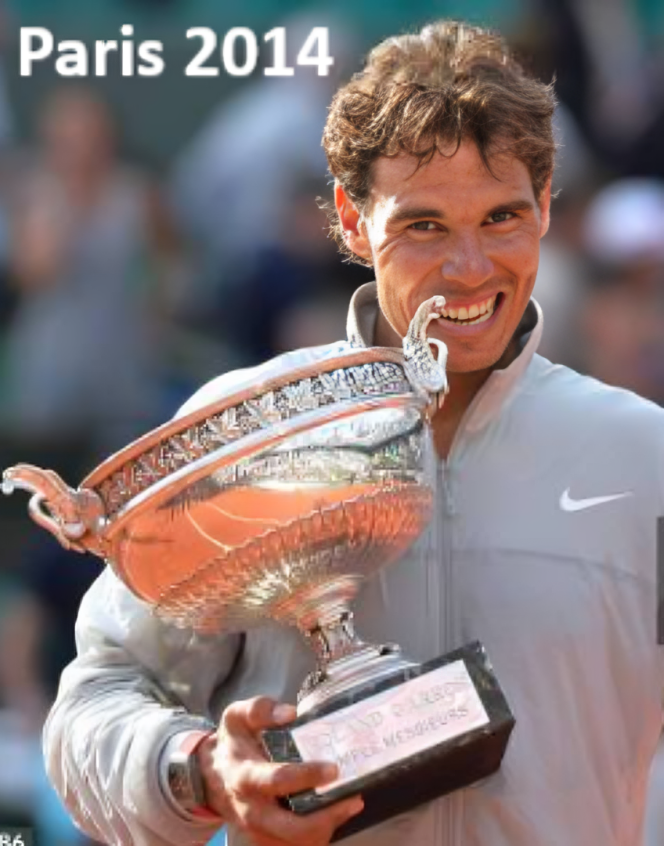
Regardless of how their rivalry ended, Nadal’s legacy on clay remains unparalleled. His astounding 14 French Open titles are unlikely to ever be matched. Even as early as 2012, his seventh title was considered extraordinary, surpassing Björn Borg‘s seemingly untouchable six titles (1974-1981). Every additional triumph defied superlatives. Among these, Nadal’s penultimate French Open victory stands out, I believe. Held during the pandemic, the tournament was moved from May to October under cold, damp conditions that slowed the courts. These conditions theoretically worked against Nadal, who always preferred faster clay to maximize his spin-heavy game. Moreover, the absence of spectators created an unusual atmosphere for an animated player accustomed to roaring crowds on Philippe Chatrier. Yet Nadal overcame all obstacles, winning the title without dropping a set. Only the emerging star Jannik Sinner came close to stealing a set, something even the great Đoković couldn’t manage in the disappointing final.
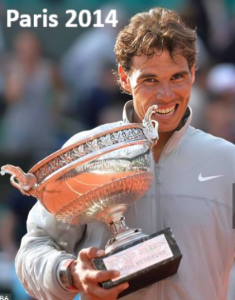 Nadal’s ability to rise from setbacks is legendary. Beyond the injuries that hampered him in 2016, his career hit a significant roadblock in 2012 after a shocking loss to Lukáš Rosol at Wimbledon. Sidelined for seven months due to knee injury, Nadal faced scepticism when he lost to doubles specialist Horacio Zeballos in the Viña del Mar ’13 final. Critics predicted his decline, but Nadal silenced them by dominating the season later that year, winning four big hardcourt titles: Indian Wells, Montreal, Cincinnati, and the US Open.
However, Rosol’s upset at Wimbledon marked a turning point for Nadal’s performance at the most prestigious tournament. Between 2006 and 2011, he played five Wimbledon finals but failed to reach another final thereafter. While he came close in 2018 (losing a thriller in the semifinals), his early exits became more expected following the Rosol match. Between 2012 and 2017, Nadal did not reach even a quarterfinal at Wimbledon. However, in his last three appearances at the tournament (excluding 2020, which was cancelled, and 2021, when he withdrew), he made the semifinals each time; these runs ended against either all-time greats or due to injury. A key factor in this late-career resurgence was the influence of his coach, Moyá, who replaced Nadal’s uncle Toni Nadal in 2017. Under Moyá’s guidance, Nadal developed a more effective serve – critical for faster surfaces – and adjusted his playing style to account for his age, employing a more calculated approach. He became more eager to attack the net, and selective in expending energy, choosing when to push at full intensity and when to conserve it.
In his mid-20s, Nadal was renowned as the most reliable five-set player, boasting a 15-3 record in such matches (in addition to the previously mentioned defeats to Federer, he also lost to Hewitt in five). However, this perception shifted dramatically after his painful loss to Đoković in the unforgettable 2012 Australian Open conclusion – the longest final in history (partly as a result of both champions breaking the rules of maintaining the required pace between points) at nearly six hours. Nadal led 4:2 in the fifth set but ultimately lost, a defeat that left a psychological mark. After this match, his five-set record dropped significantly, with just 7 wins in his 17 following encounters of this type. Particularly concerning for his fans were back-to-back quarterfinal losses in Melbourne to Dominic Thiem (2020) and Stefanos Tsitsipas (2021). Both matches were gruelling four-hour battles in which Nadal lost all tight sets, raising doubts about his ability to perform at his best under the biggest pressure against much younger opponents.
Yet, he defied these doubts with a miraculous 2022 season. At ~36, just months after relying on crutches, the balding Nadal, but true to his headband since his first full ATP season (2003), returned to his peak form, winning two major titles. His Australian Open final against Daniil Medvedev will be particularly indelible; trailing two sets to ‘love’ and *2:3 (0/40), Nadal mounted an extraordinary comeback to win in five sets against ten years younger opponent. Later that year, he defeated Félix Auger-Aliassime – 14 years his junior – in a lopsided five-set battle at Roland Garros, featuring the subtext of facing a player advised by his own uncle, Toni… Nadal went on to claim his 14th French Open title, brutally dominating Casper Ruud in the final. By midyear, Nadal seemed poised to achieve the sport’s ultimate feat: winning all four majors in a calendar year.
However, his Wimbledon quarterfinal against Taylor Fritz marked the beginning of the end. Nadal entered the match with a stellar 35-3 season record but suffered an abdominal injury early in the second set. Ignoring his father’s advice to retire, Nadal pushed through in a display of sheer persistence – risking his shots more than usual – he overcame an ambitious but technically limited opponent in a marathon contest. The injury worsened, forcing him to withdraw from the highly anticipated semifinals against refractory Nick Kyrgios, who solidly tested Nadal in their three previous major encounters. [ Nadal was closer to win four Slams in a row in a non-calendar year at the Aussie Open ’11 when he sensationally lost to his compatriot David Ferrer in the quarterfinals ] The Fritz match effectively ended Nadal’s career at the top, as he struggled with injuries (left foot in particular) in the following months, experiencing a steady ranking decline in 2023. Between his shocking second round Australian Open ’23 exit (ousted by American journeyman Mackenzie McDonald) and his return in early 2024, Nadal did not play professionally, marking the longest hiatus of his career.
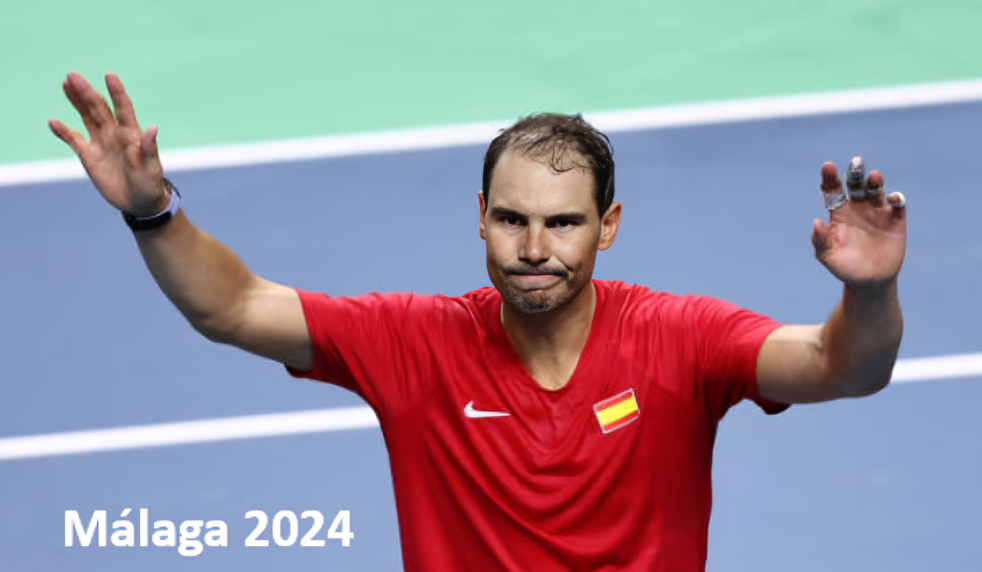
Nadal announced 2024 would be his final season, hoping to end his career on a high note. Unfortunately for him, low ranking caused exceptionally tough draws in his beloved Paris, French Open and the Olympics saw him departure early, losing to Alexander Zverev (1R) and Đoković (2R), respectively. His last realistic shot at glory came at the Davis Cup Finals in Málaga. However, Spain fell to the Netherlands in the quarterfinals, with Nadal losing to an average Dutch player Botic van de Zandschulp in spite of several months of preparation for this special occasion. Carlos Alcaraz, Nadal’s unquestionable heir, also struggled under the weight of expectation, failing to secure a crucial doubles victory.
On his retirement day, Nadal with tears in his eyes reflected with humility: “I’m just a good person from a small village in Mallorca. I want to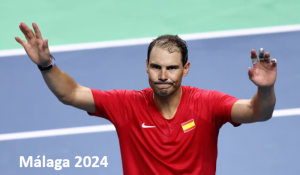 thank you for allowing me the opportunity to spend these last days as a professional team player. My body has told me it doesn’t want to play tennis anymore, and I have to accept that. I am privileged. I have been able to make my hobbies my profession.”
The first decade of this Century (2000s) belonged to Federer, the 2010s to Đoković. If the tennis gods wanted to be fair, they should have given the legendary Spaniard the edge in Grand Slam titles over the other two greatest players, as he was their most challenging rival during their two separate decades of hegemony. But that did not happen. Even though Nadal surpassed Federer in major titles (22 to 20), he finished two behind Đoković, who also claimed the elusive Olympic gold medal in 2024, basically ending the discussion “¿Who’s the Goat?”. Despite his superiority over Đoković on clay (20-9 Head-to-Head, including 8-2 at the French Open… one five-setter), Nadal ultimately lost the race for the most majors, a reality that likely stings. Another blemish on his otherwise stellar legacy is the absence of a season-ending ATP Finals title (historically known as “Masters”). Nadal reached the finals in 2010 and 2013 but was outclassed both times by his most demanding rivals, simply better than him under the roof. His scheduling-packed with intense hard/clay-court events between March (Indian Wells) and June (French Open) – often left him physically depleted in the latter half of the season, contributing to six missed appearances at the “Masters” event as a Top 10 player.
Career record: 1080-228 [ 312 events ]
Career titles: 92
Highest ranking: 1
Best GS results:
Australian Open
(champion 2009 and 22; runner-up 2012, 14, 17, 19; semifinal 2008; quarterfinal 2007, 10-11, 15, 18, 20-21)
Roland Garros
(champion 2005-08; 10-14; 17-20 and 22; semifinal 2021; quarterfinal 2015)
Wimbledon
(champion 2008 and 10; runner-up 2006-07, 11; semifinal 2018-19 and 22)
US Open
(champion 2010, 13, 17 and 19; runner-up 2011; semifinal 2008-09, 18; quarterfinal 2006)
Davis Cup champion: 2004, 08 (didn’t play the final), 09, 11 and 19
Olympic Gold medallist (Beijing 2008 – singles, Rio 2016 – doubles)
Masters runner-up 2010 and 2013
Year-end rankings 2001-24: 811 – 200 – 49 – 51 – 2 – 2 – 2 – 1 – 2 – 1 – 2 – 4 – 1 – 3 – 5 – 9 – 1 – 2 – 1 – 2 – 6 – 2 – 670 – 154
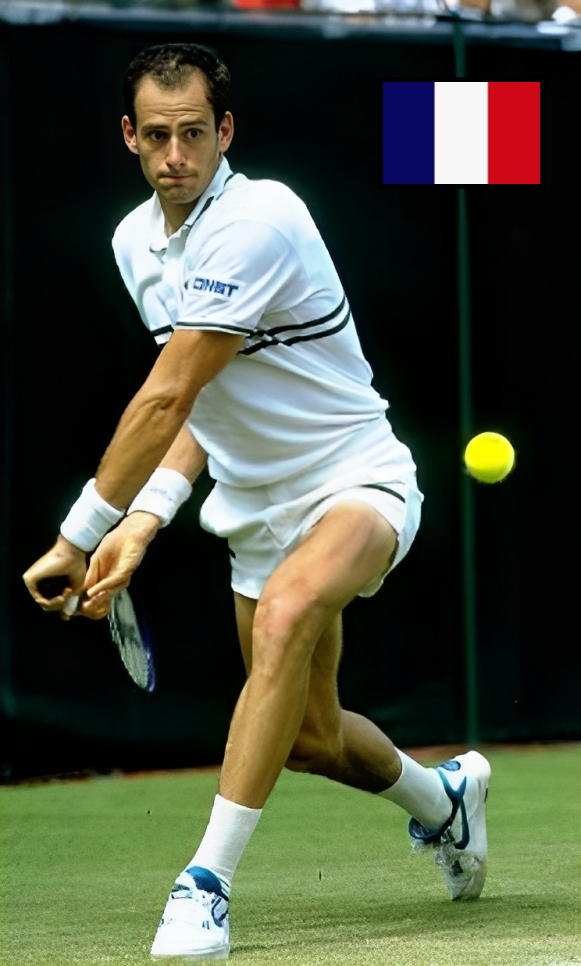
Born: January 4, 1965 in Casablanca (Morocco)
Height: 1.90 m
Plays: Left-handed
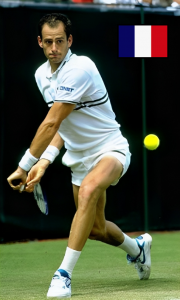 He was one of three French prodigies seen as potential successors to Yannick Noah in the mid-1980s, alongside Henri Leconte and Thierry Tulasne. All three reached the Top 100 as teenagers, but while offensive left-handers Forget and Leconte continued to excel, the right-handed defensive Tulasne, despite his early promise, struggled to maintain the same high level of tennis in the latter half of the decade. Leconte reached the final of the French Open in 1988, Forget remains among the most accomplished players never to reach a Grand Slam semifinal. Overall, his career outshone Leconte’s, primarily thanks to a stellar 1991 season, where he competed alongside legends such as Stefan Edberg, Boris Becker, Jim Courier, and Michael Stich – the four best players of that year, Forget almost defeated them all at that time.
In 1989 – a very frustrating year for him when he was out of the competition for almost six months due to knee injury – Forget made a consequential change to his equipment, adopting a much lighter bat (began using the Lacoste Equijet, a racquet with a very distinctive shape) that resembled the specifications of 21st-century racquets. This upgrade not only modernized his game but also enhanced his serve’s effectiveness, enabling him to generate more cheap points and solidify his status as one of the most dangerous servers on the tour. This shift in equipment likely contributed to his breakthrough performances in the early 1990s, where his serve became a defining weapon. Forget’s standout 1991 year began with remarkable form. He won 25 of his first 28 matches, including three victories at the then-prestigious Hopman Cup. During this period, he defeated World No. 1 Edberg twice and briefly seemed poised to challenge for the ATP’s top ranking. His serve – a key weapon – elevated the game’s standard, delivering over ten aces per match as he triumphed in Brussels (untypical number at the time in the ‘best of three’ format), and blending power with precision in ways rarely seen in the 1980s.
However, his momentum slowed after two losses to Courier: in the Indian Wells final (a tie-break in the fifth set) and the Key Biscayne fourth round. A disappointing clay-court season followed, but Forget rebounded later that year. He captured the two most significant titles of his career in Cincinnati and Paris and played a crucial role in France’s Davis Cup triumph. It was the French team’s 7th Davis Cup title overall and their first since 1932. Notably, he defeated a young Pete Sampras three times that year, including a decisive fourth rubber in the Davis Cup final.
By the early 1990s, Forget’s game had evolved into an intriguing hybrid style. His first serve was among the best on the tour (more than 700 aces in 1991 – the first leader of the ace ranking), allowing him to mix serve-and-volley tactics behind the first serve with powerful baseline play behind the second, particularly on hard courts and carpet. His second serve often left him vulnerable, leading to unpredictable rhythm changes that kept opponents off balance. On grass, he adhered more strictly to serve-and-volley traditions. He was generally “glued” to the baseline during clay-court matches.
In 1993, Forget suffered a severe right-knee injury, sidelining him for nearly a year. Upon returning, he adapted his game further, shifting from a serve-and-volley/baseline hybrid to a more traditional baseline style regardless of the surface, occasionally surprising opponents with fast serves and net approaches. Despite limited mobility, he achieved a remarkable quarterfinal run at Wimbledon in 1994, entering the tournament ranked 1130 (!) in the world. He also reached two finals: Gstaad on clay just after that Wimbledon, and Queens Club the following year… finally won his last ATP title in Marseille ’96 having experienced a four-year drought in raising the trophy. Given his otherwise successful career, the lack of a Slam semifinal is a significant setback. No-one expected him to play the quarterfinal at Wimbledon ’94, but in his four previous major quarterfinals (Wimbledon 1991 and 1992 as well as Australian Open 1991 and 1993) he could have been anticipated to get the upper hand at least once, because he had defeated each of his opponents before; especially the loss to the ageing John McEnroe could hurt Forget. The skinny and balding Frenchman had remained a record holder for many years in the most major quarterfinals defeats without a semifinal (5) before Tommy Robredo took it over (7). Currently the record holder is Andrey Rublev with 10.
Doubles remained an essential part of Forget’s career, particularly as his singles game declined. In 1996, alongside Jakob Hlasek, he reached at least the quarterfinals of all four Grand Slam events (six years earlier they’d triumphed at Masters, both playing with shaved heads). His final noteworthy achievement came that year when he teamed with Guillaume Raoux in Davis Cup doubles to secure a critical point, helping France claim their second Davis Cup title, against Sweden in an extraordinary tie.
Satisfied with his career, Forget retired in 1997 after playing only five tournaments that year. At the time of his retirement, he had lost 11 of his last 12 ATP singles matches, but his legacy as a Davis Cup hero and a versatile competitor endured. When France won the Davis Cup trophy for the third time in the Open Era, in 2001, he served as the team captain, further solidifying his legacy in French tennis.
Career record: 378–290 [ 291 events ]
Career titles: 11
Highest ranking: No. 4
Best GS results:
Australian Open (quarterfinal 1991, 93)
Wimbledon (quarterfinal 1991-92, 94)
Davis Cup champion 1991 (singles) and 1996 (doubles)
World Team Cup champion 1986 (doubles)
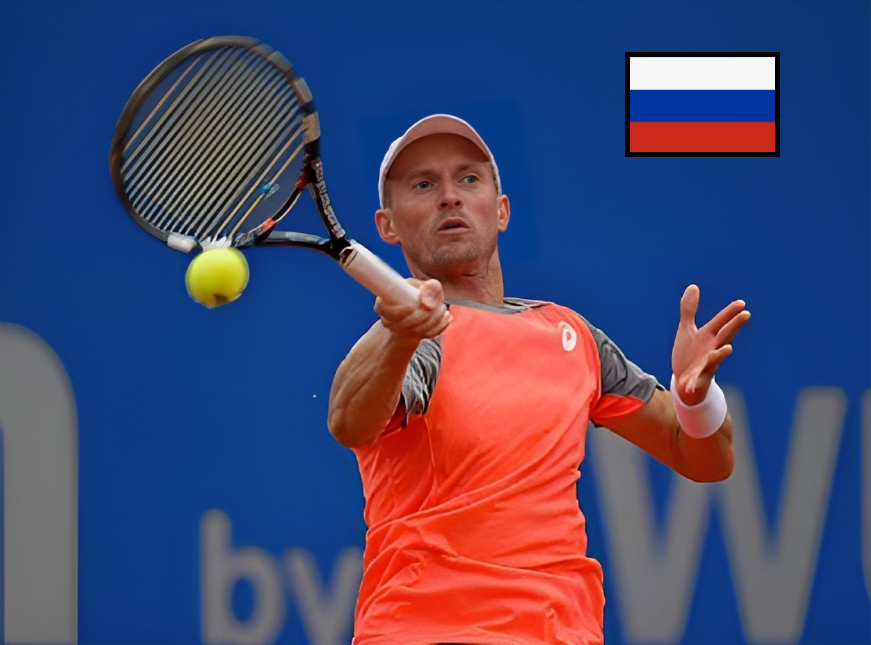
Born: June 2, 1981 in Severodonetsk (Ukrainian Voroshilovgrad Oblast in Soviet Union)
Height: 1.79 m
Plays: Right-handed (two-handed backhand)
Николай Владимирович Давыденко… stumbling over his own feet, showing signs of frustration when nothing critical had happened, hesitating to challenge calls even when TV spectators could see it was worth it, retiring without signs of injury, delivering serves with a regular, unthreatening pace, and even hitting two-handed volleys – sometimes from positions where a traditional overhead would have been the obvious choice. Watching these moments in Davydenko’s career, you might wonder: how did this humble guy born in Ukraine, tennis-wise educated in Germany, representing Russia, who went bald in his early 20s, become a solid Top 5 player for several years and a multiple Grand Slam semifinalist?
The short answer can be summed up by Juan Martín del Potro‘s famous remark after losing to him in the 2009 ATP Finals, the first edition of this event in London: “He plays like PlayStation.” If you only focus on Davydenko’s more awkward moments, you miss the bigger picture – 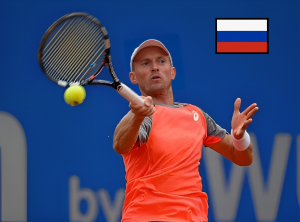 he was a player who operated on the baseline like a well-oiled machine.
Davydenko once said he admired Polish ski-jumper, the best in the world in the early 2000s, Adam Małysz, who attributed his success to focusing solely on making a good jump. In tennis, it’s more challenging to concentrate only on yourself, as you’re constantly interacting with your opponent, but this focus was something Davydenko aimed for throughout his career. His game plan was simple: don’t think about the opponent across the net, keep high percentage of first serve in, stay close to the baseline, run fast, and hit clean, flat strokes off both wings as soon as the ball bounced. This straightforward, high-speed approach was remarkably effective, even against players like Rafael Nadal, who struggled to adjust to Davydenko’s relentless pace. Davydenko defeated Nadal twice in Masters 1K finals (Miami 2008 and Shanghai 2009), also winning their dramatic Doha ’10 final. The first of Davydenko’s three Masters 1K titles comes from Paris-Bercy 2006 – the last edition on carpet.
But while this method worked against Nadal, it didn’t against Roger Federer. The Swiss maestro, with his ability to vary spins and slice, could outmaneuver the Russian’s baseline game. Federer repeatedly frustrated Davydenko on the big stages, knocking him out of major tournaments six times, including two quarterfinals (Australian Open 2006 and 2010) and three semifinals (US Open 2006 and 2007, French Open 2007). Davydenko could often push Federer to 5-all in sets, but the Swiss almost always found a way to play tense sets better, it was a mental thing between them as “Kolya” admitted. In hindsight, Davydenko might rightfully think: <If I hadn’t met Federer so many times, I would have been a Grand Slam champion>. Davydenko lost four major semifinals (only Tim Henman lost more – six – never advancing to the final). Ironically, he had the best chance in his first semifinal when he faced Mariano Puerta at the 2005 French Open. The Russian was two games away from victory in the decider, but the Argentine coped better with the tight finish line. In hindsight, we know Puerta was probably playing that match under the influence of illegal substances.
That long-awaited breakthrough finally came at the 2009 ATP Finals in London, where Davydenko was in top form, having an impressive 18-5 record in tie-breaks leading into his semifinal against Federer. Perhaps that confidence helped him remain calm when he faced 0/30 while serving at 4:5 in the deciding set. For the first time in 13 attempts, Davydenko beat his nemesis, winning 6-2, 4-6, 7-5. “I had to hit fast and aggressive strokes and keep the points on my racquet. I stepped on the court, felt the ball, and did everything I could to finish it in straight sets. I was nervous during match point, and the emotions just burst out after I won,” Davydenko reflected. After 12 straight losses to Federer, he finally had his revenge.
Davydenko finished 2009 in style and carried that momentum into 2010, where he started the season by defeating both Federer and Nadal en route to winning the Doha title. By the time he entered the 2010 Australian Open, many pundits considered him a genuine title contender. He could realistically believe in achieving something similar to what Andrés Gómez (French Open 1990) and Petr Korda (Australian Open 1998) had done – claiming maiden Grand Slam titles late in their careers. And for a set and a half in his quarterfinal against Federer, Davydenko dominated, looking like he might pull off another upset. But Federer, ever the problem solver, rallied to win the match 2-6, 6-3, 6-0, 7-5. It was the last time Davydenko would reach the second week of a Grand Slam.
The final four years of his career were reminiscent of the first four – he often found himself eliminated in the early rounds. Doha 2013 marked the last time he reached an ATP final, where he came just a few points from the title. Despite the loss, he finished his career with an impressive 21-7 record in finals. For a stretch in the mid/late-2000s, Davydenko was a force to be reckoned with (fruitful period began as he triumphed in Moscow ’04), even if his flashes of brilliance were often overshadowed by more awkward moments. Unusually, Davydenko didn’t break into the Top 10 until he was 24, an age when many players who finally reach that level often enjoy just one or two standout seasons. Yet, once he got there after changing his style from a counter-puncher into an aggressive baseliner, he stayed for a remarkably long time, defying the trend seen in those who usually break through earlier in their careers.
Career record: 482-329 [ 346 events ]
Career titles: 21
Highest ranking: No. 3
Best GS results:
Australian Open (quarterfinal 2005-07 & 10)
Roland Garros (semifinal 2005 & 07; quarterfinal 2006 & 09)
US Open (semifinal 2006-07)
Davis Cup champion 2006
Masters champion 2009
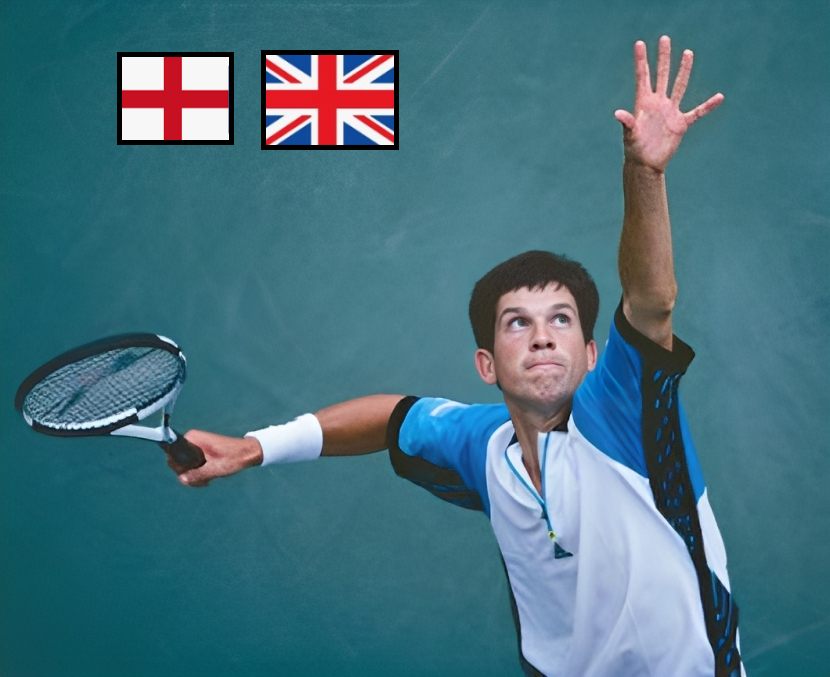
Born: September 6, 1974 in Oxford (South East in England)
Height: 1.85 m
Played: Right-handed
Some encounters separate the men from the boys, and for Henman, such a match occurred in the first round of Wimbledon ’96 against the newly crowned French Open champion, Yevgeny Kafelnikov, on Centre Court. Although they were peers, Kafelnikov was far superior at the time – he had already established himself as “the man,” while Henman was seen as a boyish-looking player, admired for his classical style but perceived as perhaps too fragile, physically and mentally, to win the big titles. 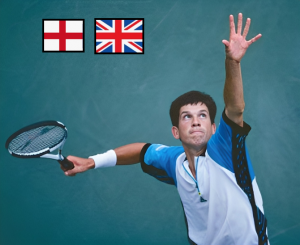 In that skirmish, with a supportive home crowd behind him, Henman showed grit a couple of times and sensationally prevailed in five sets, suddenly becoming a national hero in Great Britain. His subsequent matches at Wimbledon ’96 captured immense public interest. It was a tournament full of surprises, and when Henman reached the quarterfinals, he was even seen as a potential champion, although he ultimately lost to Todd Martin. Nonetheless, that tournament made him a new tennis star and cemented his lifelong association with Wimbledon. After Wimbledon ’96, it was obvious that Henman would have a better career than the most accomplished British player born in the 1960s, Jeremy Bates, who waited until he was almost 32 before winning his only title. Henman captured his first title at the age of 22, in Sydney.
A phenomenon called “Henmania” accompanied his appearances at the most prestigious tennis event from then on, lasting until 2004, his most mature and consistent year when he reached the French Open and US Open semifinals for the only time in his career; the best period, in fact, began in late 2003 when he triumphed at Paris-Bercy – his biggest career title. Between 1996 and 2004, Henman was Wimbledon’s biggest attraction (in 2005, the British hopes shifted to teenage Andy Murray), reaching the semifinals four times and the quarterfinals another four times. The closest he came to fulfilling his Wimbledon dream was in 2001 when he lost an epic, three-day semifinal to Goran Ivanišević – being just two points away from what felt like a “failed destiny.”
Henman was often the victim of tough draws. In 1998 and 1999, he faced the best grass-court player of the ’90s, Pete Sampras, and although he played well, the details made the difference in both four-set losses. In 2002, another wild Wimbledon – first time in history dominated by players mainly operating on the baseline – he quickly lost in the semifinals to Lleyton Hewitt, who was ruthless against attacking players in the early 2000s. Ironically, the other semifinal that year featured David Nalbandian against Xavier Malisse …both of whom Henman would have been heavily favored against.
Some might call Henman an “underachiever”, as he is a leader of the most Grand Slam semifinals without reaching the final, had he not won Paris-Bercy in 2003. In hindsight, that title was remarkable, considering how players like Nikolay Davydenko and Roger Federer developed afterward. Henman’s semifinal win over Andy Roddick, who was the best player of that season, should be recognized as a huge victory. After so many disappointments in native Britain (he failed to conquer Queens Club too, once being very close in three finals), it was the French capital that Henman broke through. In the final, he faced Andrei Pavel, who had shocked everyone with his successful week shortly after the comeback from injury. “It’s been an unbelievable week for me,” Henman said after the final he won convincingly, as expected. “If you’d have told me six months ago that I’d win this title, I’d have probably thought you were smoking something.”
In terms of style, Henman was a prototype of the early Federer. His classic game and frequent use of backhand slices often drew comparisons to Stefan Edberg and Patrick Rafter. However, unlike those multiple Grand Slam champions, Henman wasn’t a consistent serve-and-volley attacker, even on grass during the era when it was the norm. Perhaps this more measured approach explains Federer’s early struggles against Henman – the Brit won six of their first seven meetings (the only loss coming when Henman retired) including one final (Basel). To some extent, Federer was losing to a more experienced version of himself. But by 2004, as Federer adjusted his style to become more of a defensive player, the Swiss turned the tables, winning their last six matches without dropping a set, including two almost identical finals (Indian Wells ’04, Tokyo ’06) – the last finals in Henman’s career, he finished it with a negative record losing 17 out of 28.
Career record: 496–274 [ 273 events ]
Career titles: 11
Highest ranking: No. 4
Best GS results:
Roland Garros (semifinal 2004)
Wimbledon (semifinal 1998-99, 2001-02; quarterfinal 1996-97 and 2003-04)
US Open (semifinal 2004)
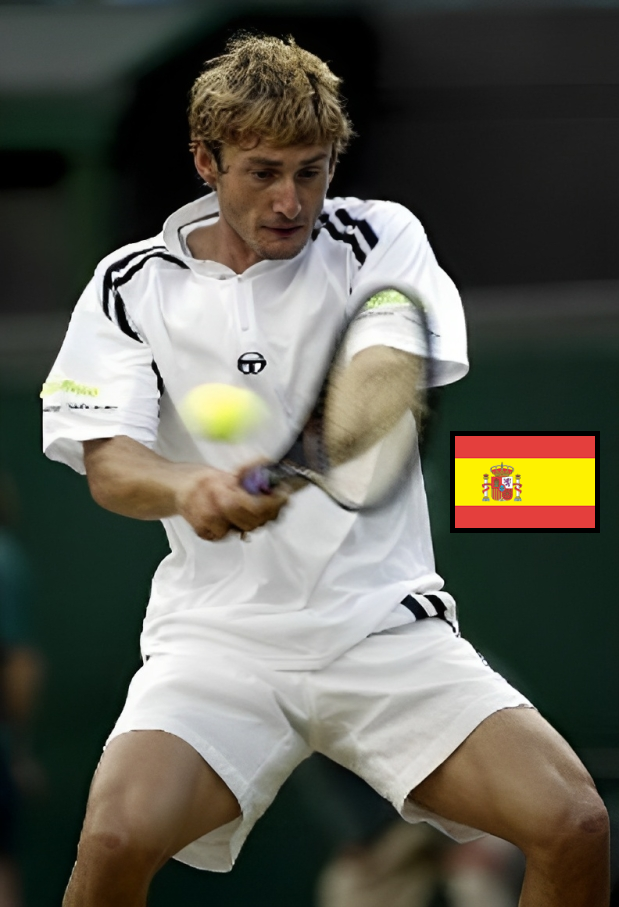
Born: February 12, 1980 in Ontinyent (Valencia)
Height: 1.82 m
Plays: Right-handed (two-handed backhand)
When J.C.Ferrero first appeared on the ATP tour at the end of the last century, I remember being surprised by the buzz around him. Someone, somewhere – whether I read it or heard it – wrote/said that he was part of a group of talented youngsters born in the early 80s, and he would soon become the best in the world. That comment stuck with me because I didn’t see anything special in his game, either technically or in his on-court behaviour, which was reserved, rather dispassionate…
Ferrero’s introduction to the ATP circuit was explosive. In his debut tournament in Casablanca ’99, he reached the semifinals as a qualifier, riding a 24-match winning streak (five in Morocco, including qualifying… after 19 consecutive victories on the Satellite 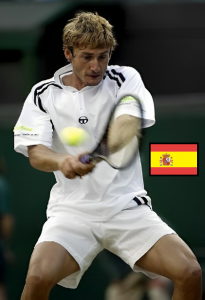 circuit). He soon claimed his first Challenger title (Napoli) and made a deep run at the ATP event in Barcelona, where he took Carlos Moyá – then one of the world’s top players – to a dramatic third round contest, the first of many thrillers between them.
From 2000 to 2003, Ferrero dominated the clay courts. He reached two successive French Open semifinals (2000 and 2001), both times losing to Gustavo Kuerten, but won more matches on clay than anyone else in those four years, claiming titles in Monte Carlo (2002, 2003) and Rome (2001) as well as leading the Spanish team to the first Davis Cup trophy. In 2002, he made the third all-Spanish French Open final but lost in an unusual match against five years older Albert Costa. Twelve months later, however, Ferrero triumphed in Paris, defeating surprise finalist Martin Verkerk and sealing the win with his trademark shot – a blistering forehand from the middle of the court. His friends called him “Mosquito” due to his speed and stinging forehands, which he could unleash from any angle.
Ferrero’s backhand was super solid, his volley technique impeccable, and his serve improved as he bulked up, all of which helped him reach the pinnacle of the sport. The best period of his career (lasting roughly 15 months) began with the Masters ’02 final. After his French Open ’03 triumph, Ferrero found himself in the elite company of Andy Roddick and Roger Federer, battling for the top spot in the rankings. At the US Open ’03 and a few months later in Madrid, Aussie Open ’04 too, he proved that it would be unfair to call him a “clay court player” because he achieved quite impressive results on hard courts.
What separated Ferrero from older clay-court specialists from Spain, who played in the same era, like Àlex Corretja, A.Costa, and Félix Mantilla (all three used to play one-handed backhands), was his ability to win tight, dramatic matches on a regular basis. Before losing the Rotterdam final in February 2004, Ferrero had won three consecutive matches in deciding tie-breaks. By that point, he had already survived 10 match point-down matches in over 100 main-level events, an extraordinary stat that underscored his endurance as well as the capability to play his best tennis when it mattered the most.
However, after Rotterdam, things began to unravel. In Marseille, Ferrero shockingly lost to French journeyman of offensive attitude, Gregory Carraz, and soon after, he contracted a highly contagious disease. “I found out yesterday I had the chickenpox,” Ferrero said after withdrawing from Indian Wells and Miami ’04. “Sometimes things happen, and you can’t do anything about it. I’m disappointed because I was looking forward to playing here in the States.” Later on that season he injured his ribs and right wrist.
The illness and injuries weakened his body, and though he returned to the clay-court swing in 2004 skipping just Barcelona and Rome, he never fully regained the confidence that had once made him one of the most feared players in the world. By the end of 2003, Ferrero was ranked No. 3, having briefly held the No. 1 spot after winning the US Open semifinal, where he showed he would claim at least one title in Melbourne and New York. But by the end of 2004, he had fallen to No. 31.
…and this is what I mentioned at the beginning of this bio – I perceived the young Ferrero as someone who would achieve as much as he ultimately did in the years 2004-2012. In those years he played just one ‘Masters 1K’ final (Cincinnati ’06) and two major quarterfinals, ironically at Wimbledon, on a surface that seemed to be his weakest during his peak years… Ferrero currently coaches Carlos Alcaraz, he actually created him, and he may achieve everything with his pupil that he could have expected to achieve himself if chickenpox hadn’t struck him in that unlucky year of 2004.
Career record: 479–262 [ 268 events ]
Career titles: 16
Highest ranking: No. 1
Best GS results:
Australian Open (semifinal 2004; quarterfinal 2003)
Roland Garros (champion 2003; runner-up 2002; semifinal 2000-01)
Wimbledon (quarterfinal 2007, 09)
US Open (runner-up 2003)
Davis Cup champion 2000 and 2004 (played only doubles in the final)
Born: February 22, 1972 in Hoboken (New Jersey)
Height: 1.73 m
Plays: Right-handed (two-handed backhand)
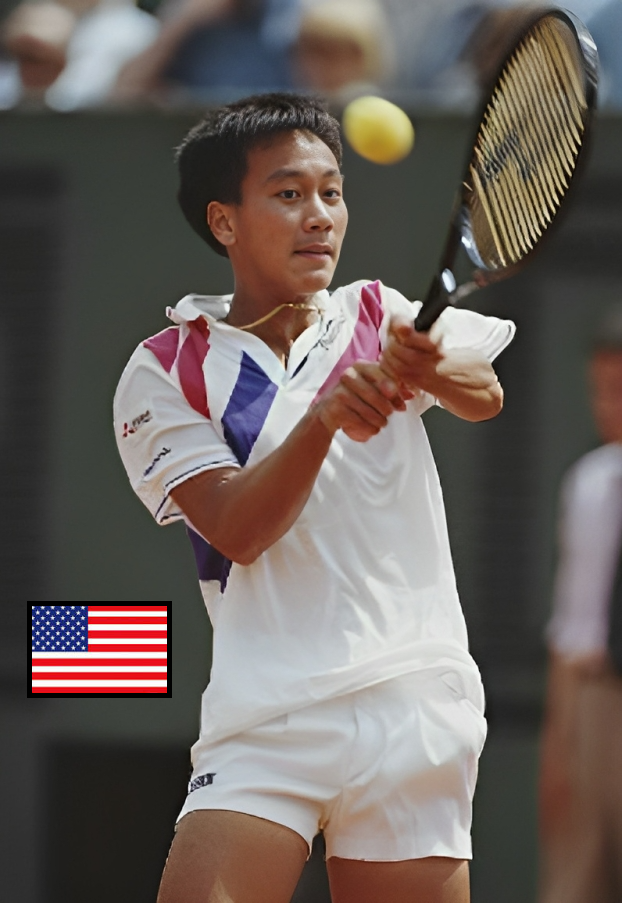
Joe, 張 Chang’s father, moved from Taiwan to the United States in 1966. Six years later, Michael Te-Pei Chang was born as the younger brother of Carl Chang (b. 1969), who was a successful junior player. When Carl realized that Michael was better than him, he decided to complete his university studies (San Dieguito High School in Encinitas) and then became his younger brother’s coach. Carl was awarded wildcards in a few ATP events, and even advanced to the main draw after qualifying once, but finished his career with a 0-5 singles record (4-20 in doubles, playing 17 out of 20 tournaments with Michael, which was meant to help improve Michael’s volley skills).
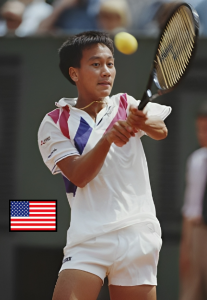 Back to Michael – he was a prodigy. Despite his modest height (165-168 cm as a teenager), he was able to beat much taller boys from higher age groups. At the same time, Franco Davín was Chang’s counterpart in South America. [ Unlike Chang, Davin fell into mediocrity on tour but enjoyed successes as a coach, with Gaston Gaudio and Juan Martín del Potro winning Grand Slam titles under his guidance ]. As a 13-year-old boy (looking younger than his age), Michael was already winning events for 16-year-olds. There were three key factors that made him an exceptional teenager: sturdy legs, high tennis IQ, and, most importantly, an unbelievable fighting spirit. The young Chang epitomized the “never say die” attitude. Every point, game, and set mattered to him, and he played every match from start to finish with 100% physical and mental dedication.
At just 15, Chang claimed his first Challenger title. It was his debut at that level, though he had already played four events at the main-level. At the 1987 US Open, Chang became the youngest player (15 years, 6 months) to win a main draw match in the history of the event, defeating veteran Paul McNamee. “When things around me get to be too much,” said Chang, “My parents take me away. We relax or go fishing, take my mind off everything.”
A year later, Chang captured his first tour title in San Francisco at just 16 years and 7 months. “I just hope that a lot of young kids who can relate to me because of my age will look up to me,” Chang stated after defeating Johan Kriek in the final. “I hope that I will never be conceited and will remain humble because nobody is going to like you if you give them a hard time.”
At the 1988 French Open, many 18-year-olds were still playing in the juniors, such as Venezuelan Nicolas Pereira (b. 1970), a brilliant junior player who never made it big on tour but defeated Stefan Edberg, Boris Becker, and Thomas Muster. Meanwhile, 16-year-old Chang, already reached the third round in the main event. One year later he improved in Paris being seeded 15th in the main draw; advanced to the fourth round (he had reached that stage at the US Open ’88 too), where he was scheduled to play on Centre Court in Paris for the first time to get another valuable lesson against three-time champion and the dominant player of the decade, Ivan Lendl. As expected, Chang lost the first two sets, but instead of bowing out in the third, he staged one of the most memorable comebacks in tennis history, using all the tools at his disposal, including the famous underarm serve and standing near the service line for Lendl’s serve! Chang went on to win three more matches (another five-setter in the final against Edberg) and became the youngest Grand Slam champion in history at 17-years, 109 days old!
What was remarkable, though, was that despite his early triumph, Chang never won another major title in the next 14 years. He didn’t capture any of the biggest titles, either from a prestigious (Slams, Masters) or financial point of view (Grand Slam Cup). So how could that be, considering Chang improved significantly over the years?
Two factors may explain this phenomenon:
– Chang’s victory at the French Open came just before a shift in men’s tennis when a group of big servers, led by Pete Sampras, emerged. Before Sampras fully developed his serve, he was regularly losing to Chang – both in juniors and during the early years on tour;
– over time, Chang lost some of his greatest assets: his speed, steely determination, and knack for improvisation
As Chang’s game evolved, he notably upgraded his serve. His average aces per match increased significantly: 1.9 in 1991, 2.7 in 1992, 3.1 in 1993, 4.3 in 1994, 6.0 in 1995, and 8.4 in 1996. A racquet (Prince) an inch longer than a traditional one helped him improve his serve. During those years, Chang played in six really big finals, including the Grand Slam Cup of the years 1991–92 (losing to big-serving David Wheaton and Michael Stich), the Masters final ’95, and the Australian Open final ’96 (both losses to Becker). His most crucial match, however, was the 1996 US Open final, where he lost to Sampras. If he had won that match, Chang would have become the world’s No. 1 player. The only opponent who didn’t overwhelm Chang with an imposing serve-and-volley game in these biggest finals was Muster at the 1995 French Open. Muster won that baseline duel after coming back from a big deficit in the opening set, a feat he repeated many times that year.
Chang could still handle big servers, but it was more challenging for him in a best-of-five format. Nevertheless, he collected seven Mercedes Super 9 titles, all on outdoor hard courts in North America. Indian Wells was his favorite tournament, and he won it three times (1992, 1996–97). Twice he triumphed in Cincinnati (1993 and 1994), once in Toronto (1990) and once in Miami, known as Key Biscayne at the time (1992).
Many players reach their peak around age 25, but for Chang, that age marked the beginning of his decline. He was exhausted at such a young age after ten years of playing at the highest level. The 1997 US Open was the last tournament where Chang was considered a genuine contender for a Slam title. He lost in the semifinals to Patrick Rafter, who was not a big server, but on that day, his serve was enough to dominate the match. After this defeat, Chang failed to reach the fourth round of a Grand Slam tournament for the remaining six years of his career.
After retiring, Chang withdrew from the spotlight for several years before returning as the coach of “fellow Asian” player Kei Nishikori. In some sense, with Nishikori, Chang experienced a similar trajectory to his own career in the 1990s: although they worked together from 2014 to 2019, Nishikori lost all his biggest finals (one Slam and four Masters 1000 events). Chang, in his best years, always wanted to highlight his Asian roots (faith in God too) and preferred playing in Asian events rather than flying to other parts of the world, where he could earn more, money and points.
Career record: 662–312 [ 330 events ]
Career titles: 34
Highest ranking: No. 2
Best GS results:
Australian Open (runner-up 1996; semifinal 1995 & 97)
Roland Garros (champion 1989; runner-up 1995; quarterfinal 1990-91)
Wimbledon (quarterfinal 1994)
US Open (runner-up 1996; semifinali 1992 & 97; quarterfinal 1993 & 95)
Davis Cup champion 1990
Born: September 23, 1988 in Tandil (Buenos Aires)
Height: 1.99 m
Plays: Right-handed (two-handed backhand)
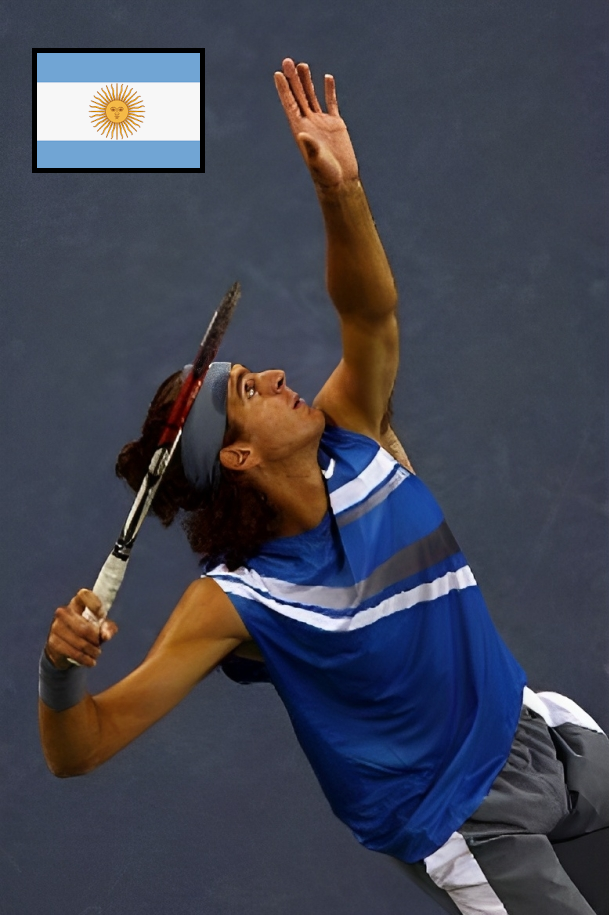
Del Potro had one of the most unusual careers among players born in the 1980s. He missed almost the entire 2010 season (playing just three events that year), and then faced further interruptions in 2014 and 2015 (appearing in only six events across those two years). His third lengthy break stretched from June 2019, being ranked 12th, when he withdrew from the second round at Queen’s Club, until February 2022. When he returned for a farewell match, he was No. 737, retaining a ranking despite not competing for so long due to the COVID-related “frozen” rankings system. The first two absences resulted from a chronic left wrist injury, 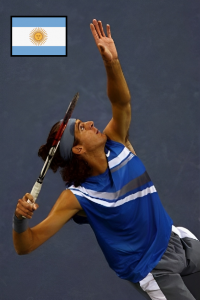 while the third break which actually ended his career, was due to a fractured kneecap. What’s quite intriguing about Del Potro’s successful results following his two comebacks after the wrist injury is his adaptation to a different playing style. Unable to hit his two-handed backhand with the same power as in his early years on tour, he compensated by developing a very effective slice, improving his net game, and making his forehand – already known as a powerful shot – even more lethal from 2011 onwards.
It’s a shame that injuries marred his career because when he took his first long break (January 2010), he had just won the US Open and reached the final of the first season-ending ATP Finals in London. He had already beaten Roger Federer (twice) and Rafael Nadal (three times) at their peak. At that time, it wasn’t certain that the “Big 4” would dominate for so long; instead, it could have been a “Big 5” or a different configuration altogether, as Del Potro had the potential to claim more victories in key matches against Novak Đoković and Andy Murray. His impressive ground-strokes and surprising agility for a player standing two meters tall made him a serious contender from the start of his career.
Interestingly, Del Potro wasn’t super tall as a young teenager; his height spiked as he began competing professionally, but initially he didn’t adjust his game to his stature, particularly his serve. Unlike other tall players who often rely on a powerful serve and forehand combination, Del Potro became known for his devastating forehand (paired with a solid, but not dominant, serve) which he employed effectively after patient rallies.
The year 2008 marked a breakthrough for him. Previously known for tight match losses, he matured, cut his ponytail, and adopted a more composed demeanour. This transformation led to a 23-match winning streak in the summer, earning four titles on two different surfaces (German-speaking cities: Stuttgart & Kitzbühel on clay, American ones: Los Angeles & Washington on hard) and reaching his first major quarterfinal. Despite this progress, he continued to lose to the world’s best. Another turning point came in Miami 2009 when he outlasted Nadal 6-4, 3-6, 7-6 in the quarterfinals, having trailed 0:3 with two breaks in the third set (he would later defeat Nadal in a similar manner at the 2016 Rio Olympics). This victory was significant not only because it marked his first win over a top player, but also due to the dramatic circumstances; it was the second in a series of ten straight matches he won with a deciding set tie-break, so it’s an obvious indicator the Miami victory over Nadal strengthened him mentally.
After claiming his first major title at the 2009 US Open, Del Potro stood on the Arthur Ashe Stadium court and told Federer: “I had two dreams this week. One was to win the US Open and the other one is to be like Roger. One is done, but I need to improve a lot to be like you. You fought until the final point. You are a great champion. I’m very happy to be here with this crown, with these people, on this court. This will be in my mind forever.” Indeed, nothing surpassed that moment for another, tormented ten years of his career, but he managed to play another US Open final in 2018 (the same year he finally won a Masters 1K title – Indian Wells). The 2009 victory in New York City was even more impressive considering that nine months earlier, Federer had defeated him 6-3, 6-0, 6-0 (!) at the Australian Open and beaten him again in the French Open semifinals.
DelPo always demonstrated a strong desire to represent Argentina. At the 2012 Olympics, he earned a bronze medal despite losing a heart-breaking semifinal to Federer – the longest three-set match in history. Four years later, he went one better, securing silver in Rio de Janeiro. He also endured defeats in two Davis Cup finals (2008 and 2011) as Argentina lost to Spain, with him narrowly losing crucial matches on both occasions. The third time was the charm in 2016, as he won two epic matches, the longest ones in his career, away from home – one against Murray in Scotland in the semifinals and another against Marin Čilić, his contemporary with a similar skill set but a healthier career, in the final in Croatia. De Potro and Čilić faced each the for the first time as 14-year-old boys at the Orange Bowl.
Career record: 439-174 [ 192 events ]
Career titles: 22
Highest ranking: No. 3
Best GS results:
Australian Open (quarterfinal 2009, 2012)
Roland Garros (semifinal 2009 & 2018; quarterfinal 2012)
Wimbledon (semifinal 2013; quarterfinal 2018)
US Open (champion 2009; runner-up 2018; quarterfinal 2008, 12 & 16)
Davis Cup champion 2016 (won two rubbers in the final)
Olympics: silver medal (Rio 2016), bronze medal (London 2012)
Born: May 22, 1981 in Vienna
Height: 1.82 m
Plays: Left-handed (two-handed backhand)
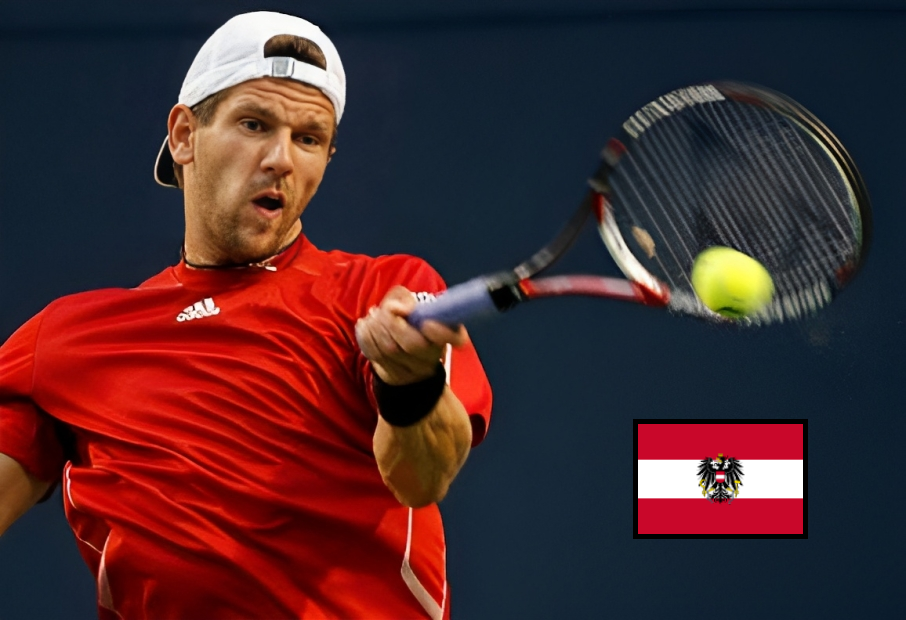
For typical Open Era players (by “typical,” I mean those born since the 50s), it was quite natural to play singles and doubles in the same events. This trend began to shift towards specialization for players born in the 70s; however, a few players from that generation (Yevgeny Kafelnikov, Jonas Björkman, Patrick Rafter) still managed to reach the Top 5 in both singles and doubles. Among players born in the 80s, barely Melzer achieved very good results in both disciplines for a longer period of time (other left-hander Michaël Llodra, four days older than Melzer, is the only player comparable) allowing him to reach the Top 10 in each, and he did so when approaching his 30th year.
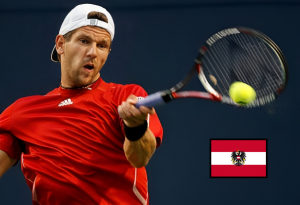 Melzer was the best Austrian player between the eras of Thomas Muster and Dominic Thiem, though not at their level. Like them, he achieved his best result in Paris (Thiem improved his Parisian efforts in New York). It was Roland Garros 2010: Melzer hadn’t progressed beyond the third round in singles in any of his previous 31 major attempts, so he could be very happy just reaching the quarterfinal against Novak Đoković, who was already established as a member of the Big 3. For Melzer, reaching the major quarterfinal was two rounds better than his previous best at this level. The end of the road seemed inevitable as the Serb led 6-3, 6-2, 2:0, but Melzer staged one of the most impressive comebacks of the decade at Roland Garros, winning a thriller on Suzanne Lenglen after 4 hours and 15 minutes, being five points away from defeat in sets 4 and 5. That victory is even more impressive in retrospect, given Đoković’s incredible record in five-setters. It marked a turning point in the career of the 29-year-old Austrian even though he had no chance in the semifinal.
The same season, he advanced for the first time to the fourth round at Wimbledon and the US Open and also defended his title in hometown Vienna, having defeated Rafael Nadal in his previous event (Shanghai), from start to finish playing arguably the best match of his life. Melzer’s journey to the Top 10 continued in the following season – he reached the round of 16 in Melbourne for the first time, followed by his lone Masters 1K semifinal in Monte Carlo after defeating Roger Federer. That win over Federer (6-4, 6-4) marked the end of Melzer’s great form, which spanned a non-calendar year. Following in the footsteps of several gifted players, he experienced a period of about ten months of consistency at the highest level, but in his case, it was stretched over two seasons, which meant he didn’t play in the ‘Masters’ tournament. Paradoxically, he won his arguably biggest title (Memphis 2012) nearly a year after the Federer victory, at a time when he was struggling to win two consecutive matches.
Melzer was among the most offensive players who used a two-handed backhand (Wimbledon and US Open doubles champion along with Philipp Petzschner during his two best years). He often played backhand dropshots using both hands – a rarity, with Nikolay Davydenko being one of the few other players to do so, with the right hand as the leading one as opposed to Melzer. Unlike Davydenko’s two-handed backhand volley, Melzer’s backhand volley was a very classical stroke. I would consider his cross-court (inside-out included) forehand to be his best shot. Playing a lot of doubles helps players improve cross-court returns, so there were a few technical aspects of Melzer’s game that made him a tricky opponent at the turn of the 2000s and 2010s. Certainly, a lack of a win against Andy Murray in their seven meetings is a missing element in the Austrian’s legacy. In their second encounter (third round of the US Open 2008), Melzer was just two points away from a straight-sets victory.
Trivia: Melzer faced his peer Federer for the first time after spending eleven years on the tour together (Wimbledon 2010). Their rivalry ended at 4-1 in favor of the Swiss. Melzer also managed to avoid being a whipping boy when facing Nadal and Đoković, finishing his career with a 1-3 record against each of them. Melzer’s younger brother, Gerald Melzer, who is nine years his junior, never came close to matching Jürgen’s achievements. However, he has made his mark in tennis history by being part of the longest two-set match ever recorded, losing two tie-break sets in Kitzbühel 2016 after an intense 2 hours and 53 minutes.
Career record: 350-334 [ 312 events ]
Career titles: 5
Highest ranking: No. 8
Best GS result:
Roland Garros (semifinal 2010)
Born: December 27, 1984 in Nice (Provence-Alpes-Côte d’Azur)
Height: 1.83 m
Plays: Right-handed (two-handed backhand)
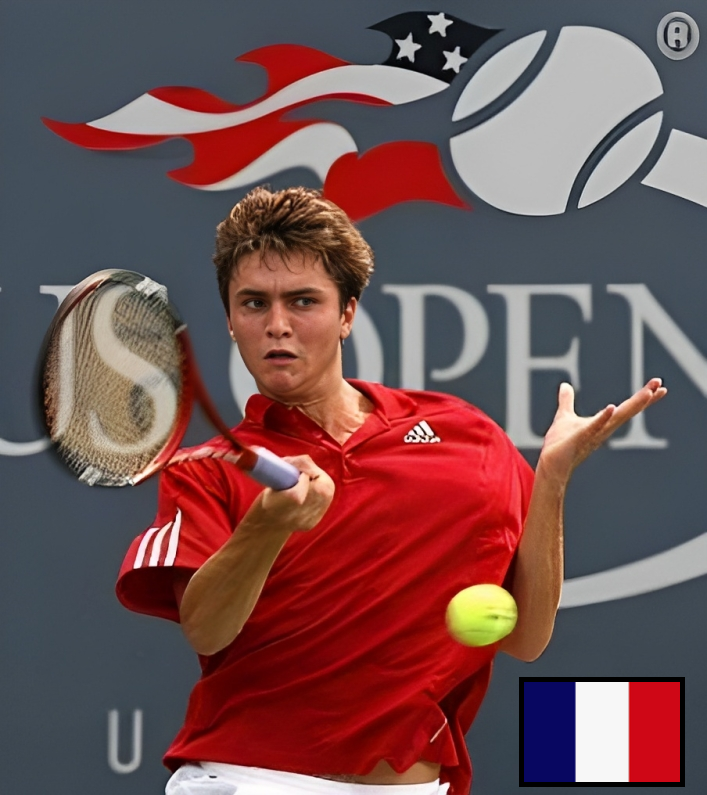
The most remarkable week of Simon’s career occurred during the 2008 Madrid Masters 1000 event (the last edition on hardcourts indoors). At 23 years old, Simon had already spent four seasons on the ATP tour, but his knack for winning tight matches hadn’t yet turned many heads. What made this week extraordinary was his ability to win four matches decided by final-set tie-breaks, in spite of winning only one match of this kind at the ATP level before. Even more astonishing, Simon navigated multiple super tough situations, repeatedly escaping near-defeat: he saved triple match point against Igor Andreev and double match point against 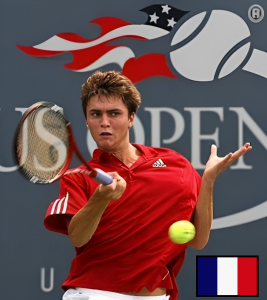 Robby Ginepri. He also overcame deficits in the deciders against Ivo Karlović (down *0:3) and Rafael Nadal (down 2:4*), the latter being his most impressive career victory. That marathon semifinal against Nadal lasted 3 hours and 23 minutes, with Simon also on the verge of losing the second set. Even though he seemed to be totally spent, Simon created a double set point in the final against Andy Murray, pushing his limits in a gruelling encounter. [ The skinny Frenchman waited six years to play his another final at this level, in Shanghai. ] Simon’s tremendous fighting spirit was first noted in 2006, his first full ATP season, when he overcame strong players like Nicolás Massú (Aussie Open) and Tomáš Berdych (Monte Carlo) despite cramping in the deciding sets. This resilience became one of Simon’s trademarks throughout his career, allowing him to grind out tough matches even when physically compromised. A testament to his patience and tenacity was strongly evident for example at the Australian Open in 2013, where he engaged in one of the longest rallies in history, lasting 72 strokes nearly two minutes, against Gaël Monfils, and ultimately defeated his compatriot under five hours struggling with his right forearm.
From technical point of view, Simon’s hallmark was his backhand. Unlike most two-handed players who occasionally mix in a slice, Simon almost never used one, relying instead on fantastic anticipation and timing to thrive in long baseline exchanges. However, this style had its downside, as his backhand volley response to well-executed passing shots left something to be desired. In my view, Simon was a “poor man’s Murray.” Their approach to the game: endurance, flat ground-strokes, and strategic point construction – was similar, but Murray generally edged Simon in every facet of the game, particularly in serves and backhand volleys. This explains Simon’s 3-16 (ten straight defeats one-sided) Head-to-Head record against Murray, despite their stylistic similarities.
Simon’s last two years, coinciding with the post-COVID period, were marked by very poor performances, but in his final season, he found the inner spirit to win two dramatic first-round matches in Paris against much higher ranked opponents, pleasing the home crowd – first at Roland Garros against Pablo Carreño Busta (trailed *2:4 in the 5th set), and later against his nemesis Murray at Paris-Bercy (trailed 4-6, 3:5*).
With a wink: if Simon was a “poor man’s Murray,” then Andreas Seppi was a “poor man’s Simon.” The eleven months older Italian from South Tyrol met Simon six times and never managed to come away with a win. Both players rank in the Top 10 for most main-level events played in the Open Era. In my opinion, both Simon and Seppi could be considered among the best players born in the 1980s, if the underarm serve had been part of the rulebook as a necessity while dropshots and attacking the net forbidden.
Simon’s consistency over the years, his ability to perform well on all surfaces, and his frequent appearances in major tournaments between 2006 and 2020 make it surprising that he never reached a Grand Slam semifinal (he only played two quarterfinals: Aussie Open ’09 and Wimbledon ’15). Despite his modest Slam record (very good percentage-wise though: 60%), Simon won an impressive number of ATP titles throughout his career. In fact, he captured as many titles as two more famous French compatriots, Henri Leconte and Cédric Pioline combined. His title at Hamburg ’11 is arguably the biggest of his career, as it held ATP 500 status. Notably, he was undefeated in the Romanian capital, Bucharest, during three trips there within six years, with his last victory there coming in 2012 when he built a remarkable 10-2 record in the ATP finals.
Career record: 504-394 [ 398 events ]
Career titles: 14
Highest ranking: No. 6
Best GS results:
Australian Open (quarterfinal 2009)
Wimbledon (quarterfinal 2015)
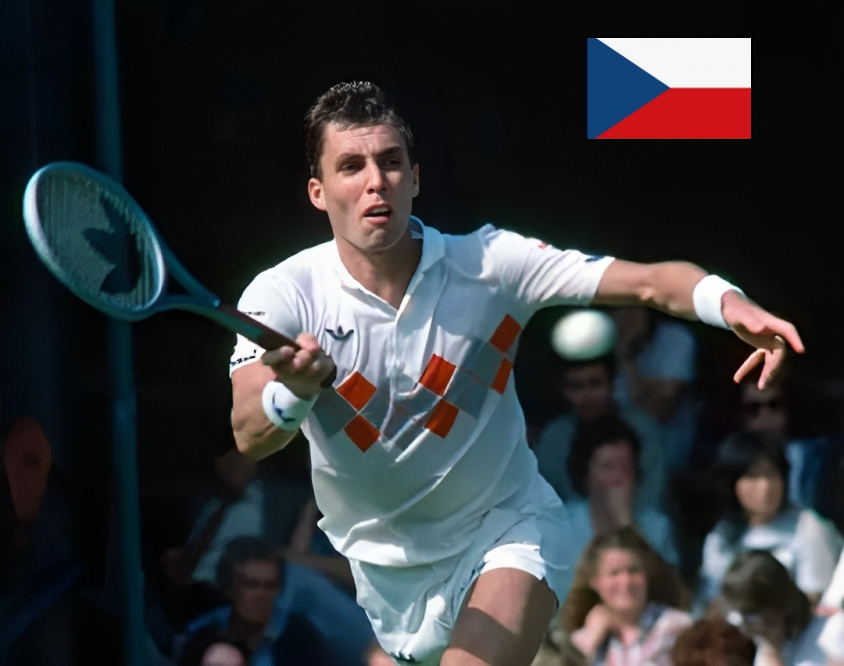
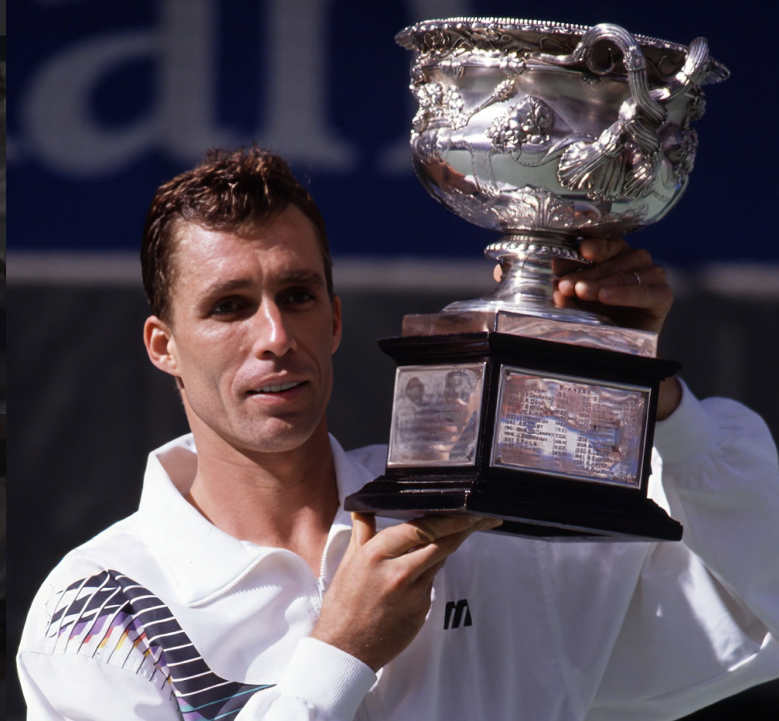
Born: March 7, 1960 in Ostrava (MoravskoSlezský kraj in Czechoslovakia)
Height: 1.88 m
Plays: Right-handed
He was undoubtedly the best player of the 1980s and an icon of that decade, the prototype of the 21st century athlete who knows how important physical preparation is, though in the early ’80s, it wasn’t certain he would establish himself as the king of tennis. While he was branded a top player at the turn of the ’70s and ’80s, he struggled to confirm his tremendous potential at the majors. At the time, no one knew that the reigning king, Björn Borg, would soon quit the sport. By January 1982, Lendl had already secured two important titles – Davis Cup in 1980 (along with Tomáš Šmíd) and the Masters ’81, as well as captured a title defeating Borg in five sets (Basel ’80) which was very telling about his capabillities; nonetheless he still hadn’t won a major, something essential for cementing his legacy.
Lendl’s path was longer than that of Andre Agassi, who, a decade later, would achieve similar successes at a younger age. Lendl famously lost his first three major finals (French Open ’81, US Open ’82 and ’83) being defeated by the legends of the 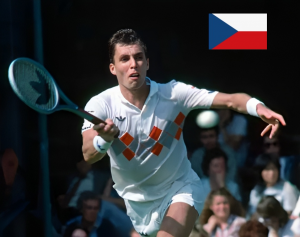 70s after balanced matches, with the fourth defeat being particularly surprising: he succumbed the 1983 Australian Open final in straight sets to Mats Wilander, a clay-court specialist, in a match few expected him to lose. When he faced his biggest nemesis of the ’80s, John McEnroe, in the 1984 French Open final, Lendl seemed destined to suffer a fifth defeat in a major final. McEnroe, in incredible form, easily won the first two sets. However, the 24-year-old Lendl, now a seasoned competitor, made a remarkable comeback to win his first Grand Slam title.
That victory was the culmination of the ‘Ivan the Terrible’ form he’d shown at the turn of 1981/82, when he won 44 consecutive matches, most of them indoors, barely sweating with an impassive expression on his face. By 1985, Lendl had truly reached the top of the tennis world, beating McEnroe once again in the spotlight, this time in the US Open final. That victory signified the end of McEnroe’s dominance – shortly after, ‘BigMac’ shockingly withdrew from the tour for seven months, never returning to his peak form.
With McEnroe and Borg both out of the picture, Lendl faced new challengers in the mid 80s: the teenage serve-and-volleyers from Northern Europe, Stefan Edberg and Boris Becker, as well as a bit older than them, baseliner Wilander. These three would become Lendl’s toughest opponents in the late ’80s, replacing the Americans in matches of contrasting game-styles: serve-and-volleyer McEnroe (Edberg, Becker) and baseliner Jimmy Connors (Wilander), who had dominated the first half of the ’80s. Connors had initially won the first eight matches against Lendl, but by 1984, the tables turned. After their final encounter in Tokyo that year, where Connors led their Head-to-Head 13:5, Lendl never lost to him again, winning 17 consecutive matches! Remarkably, Connors came close to victory only once during this streak – at the 1984 Masters, bravely fighting also at Key Biscayne ’87.
Lendl was a pioneer in terms of the off-court preparation. Guided by Dr. Robert Haas, he revamped his diet in the early ’80s, cutting red meat in favor of pasta, soup, vegetables, and water. This change improved his stamina and footwork, allowing him to position himself better for shots. To combat his mental struggles, he worked with psychologist Alexis Castorri, even taking ballet and aerobics classes. With the help of Wojtek Fibak (the Pole at the twilight of his career), Lendl transformed his backhand from a defensive slice into a powerful topspin shot, and modified his service motion, landing on left foot instead of right. Later, he teamed up with former Aussie champion Tony Roche, whose insights, particularly as a left-hander, helped Lendl improve volleying, understand how to better compete against rivals like McEnroe and Connors.
Lendl finished four seasons as the world’s top player, though 1985-87 was the peak of his dominance. He ended 1989 ranked No. 1, though many felt that year belonged to Becker, who won two majors (beating Lendl at Wimbledon – semifinal, and the US Open – final) and led West Germany to a Davis Cup title defence. Had Davis Cup points counted towards rankings (it happened between 2009 and 2015), Becker would have finished the year as No. 1.
One of Lendl’s most impressive achievements came at the 1987 US Open, where he defeated his three toughest rivals of the early/mid ’80s – McEnroe, Connors, and Wilander – in consecutive matches to claim the title. The final against Wilander had an impact on tennis rules because it highlighted the excessive length of matches at the time; after playing four sets (one bagel!) through 4 hours and 47 minutes, officials decided to reduce the time allowed between points from 30 to 20 seconds at Slams starting in 1990…
Like Borg before him, Lendl built his game around powerful serves and forehands. However, unlike Borg, Lendl’s modern equipment allowed him to hit flatter, faster shots. His serve was exceptionally tactical, often varying its pace to keep opponents off balance. Notably, Lendl was notorious for starting matches slowly, often playing at 70-80% of commitment in the first few games before taking control later in the set. His running forehand down the line was a standout shot, arguably the best in tennis history. Opponents frequently attacked Lendl, as they couldn’t match him from the baseline, which gave him ample opportunities to showcase his curved passing shots on the run.
As a player who grew up in the ’70s, Lendl naturally attacked the net on faster surfaces. Indoors, he could dictate points on his own terms, but on grass, he had to adapt by serving and volleying regularly. This wasn’t his strongest area, and while his volleying skills were very good by today’s standards, they weren’t good enough to win him the most prestigious title – Wimbledon. Despite skipping the 1990 clay-court season to focus on grass (following the last major title), and astonishingly winning Queens Club by outplaying McEnroe and Becker, Lendl fell short at Wimbledon, losing in the semifinals to Edberg, a natural grass-court player in peak form.
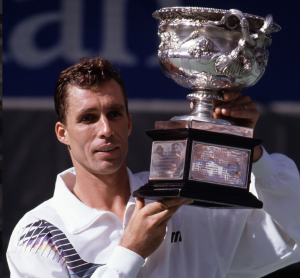 Even as he aged, Lendl remained dangerous thanks to his obsession to keep the body in shape, but at the beginning of 1993, he was clearly slipping. His biggest rivals of the late ’80s – Becker and Edberg – were still in their primes, while a new generation of American players (Pete Sampras, Jim Courier and Agassi) began to take control; Courier never won a set against Lendl in four meetings though. At the 1990 US Open, Lendl lost to Sampras in the quarterfinals, marking a defining moment in the changing of the guard in tennis. This loss prevented Lendl from playing the US Open final for the ninth consecutive year. Lendl loved playing in New York City; he’d participated in nine consecutive ‘Masters’ finals before Edberg stopped him in the semifinals of 1989. Lendl became a U.S. citizen in 1992, reflecting his desire to distance himself from his Czechoslovak roots and embrace a new identity in a country where he felt he could truly belong. It was too late to play the Davis Cup, at least he briefly represented USA at the Hopman Cup ’94. By that year, Lendl’s major appearances were underwhelming. His last match came at the 1994 US Open, where he lost in the second round to Bernd Karbacher (4-6, 6-7, 0-1 ret.) leaving the court with a back injury after wasting a *5:0 lead in the 2nd set, and nine set points! It was a stark reminder that his body was no longer able to withstand the rigours of the technologically enhanced tour (improved graphite racquets increased the serve speed and also allowed to generate massive top-spins in the early 1990s).
Lendl retired quietly, choosing not to make an official announcement but simply stepping away from the sport. After nearly two decades in the background, he returned to tennis in 2011 as Andy Murray’s coach, helping Murray win two Wimbledon titles and fulfilling, in part, the dream Lendl never achieved as a player.
While Lendl’s lack of a Wimbledon title remains a gap in his otherwise stellar career, his reign in the ’80s was indisputable. Natural movers forwards like McEnroe (1983), Pat Cash (1987), Becker and Edberg may have stopped him at Wimbledon in his top form, but his sheer consistency, fitness, and relentless pursuit of improvement made him one of the greatest players in tennis history, and distinguish grass-court player too.
Career record: 1068–242 [ 320 events ]
Career titles: 94
Highest ranking: No. 1
Best GS results:
Australian Open (champion 1989-90; runner-up 1983 & 91; semifinal 1985, 1987-88; quarterfinal
1992)
Roland Garros (champion 1984, 86-87; runner-up 1981 & 85; quarterfinal 1983 & 88)
Wimbledon (runner-up 1986-87; semifinal 1983-84, 1988-90)
US Open (champion 1985-87; runner-up 1982-84, 88-89; semifinal 1991; quarterfinal 1980, 90 &
92)
Masters champion 1981-82, 1985-87
Davis Cup champion 1980 (contributed in singles & doubles)
World Team Cup champion 1981
Year-end rankings 1978-94: 74 – 20 – 6 – 2 – 3 – 2 – 3 – 1 – 1 – 1 – 2 – 1 – 3 – 5 – 8 – 19 – 54