…2023…
In the Davis Cup finals’ “Group Stage”, 16 teams congregated in four cities (Bologna, Manchester, Valencia, and Split this year, hard indoors everywhere), forming four groups, each with four teams. This format has been in place for the second consecutive year.
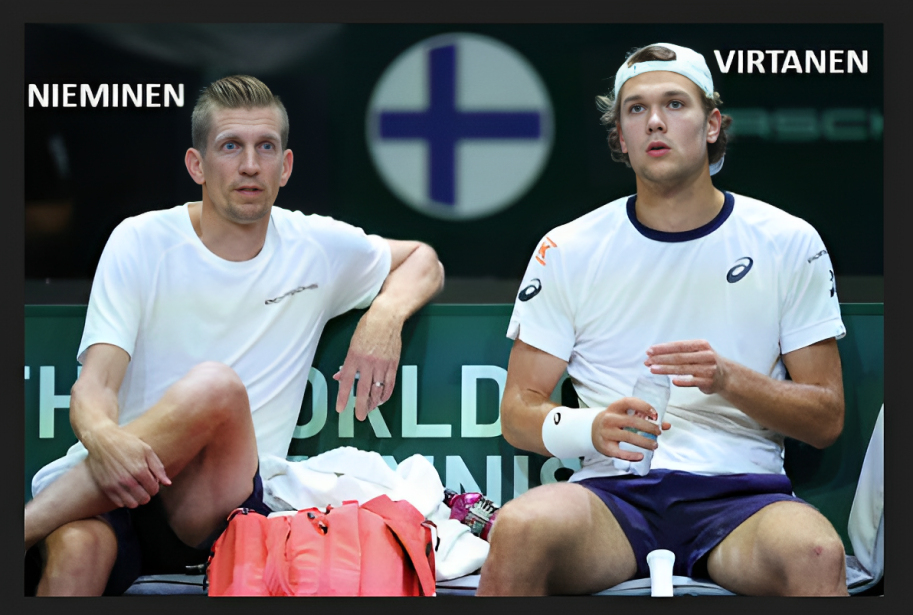
Among the eight teams that advanced further to the “Knockout Stage”, the most surprising is Finland, mentally led by former world No. 13 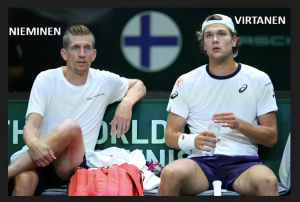 Jarkko Nieminen. They caused the biggest upset of the week by eliminating the United States. Otto Virtanen [125] emerged as a Finnish hero. The 22-year-old Finn with a powerful serve, who hadn’t won an ATP match prior to this week, managed to secure three consecutive rubbers for his country, including two victories over players much more experienced than him.
Carlos Alcaraz, being disappointed by his semifinal loss at the US Open, made the decision to withdraw from the event. The second-best active Spaniard, Roberto Bautista Agut, who is currently third in the rankings, is sidelined due to injury and hasn’t played for two months. This weakened the Spanish team, causing them to miss out on the finals, a significant setback for the tennis powerhouse of the first two decades of this century, especially considering that the finals are taking place in Spain once again.
Canada, the defending champion, deprived of two players who won the trophy a year before, shocked spectators in Bologna as they outplayed Italy and then dominated their group, finishing with an impressive 8-1 record. Challenger player Alexis Galarneau [200] strongly contributed with two singles wins and three doubles victories. The Czech team performed even better, concluding the group stage with a perfect 9-0 record, marking a historic achievement in this new format.
The weakest teams in terms of rankings, Sweden & South Korea, had similarly poor outcomes as theoretically much stronger Switzerland; each securing just one victory out of the nine possible.
In an intensely contested tie between two big tennis nations, Britain triumphed over France in a late-night conclusion of the week (11 pm on Sunday), saving four match points in the deciding doubles (four unreturned serves). Dan Evans helped the Brits the most.
In the most captivating tie of World Group I, Slovakia overcame Greece in Athens at the Panathenaic Stadium, a unique venue in the world entirely constructed from marble. Stefanos Tsitsipas continues to grapple with finding his form, managing only one point (out of 2.5 possible), narrowly avoiding defeat in his first singles as he was just three points away from losing to a much inferior player.
Group A / Canada, Italy… Chile, Sweden
Group B / Britain, Australia… France, Switzerland
Group C / Czechia, Serbia… Spain, Korea
Group D / Netherlands, Finland… USA, Croatia
…1993…
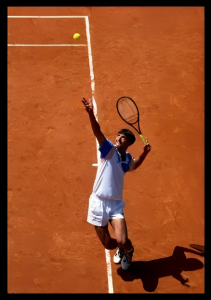 Last week at the US Open, Goran Ivanišević celebrated yet another major title as Novak Đoković‘s coach. Thirty years ago, as the best left-handed server in the world, he wasn’t as fortunate in New York, being ousted in the second round after losing a tie-break while leading 5:0. Afterwards, he decided to fly to the Romanian capital to participate in a clay-court event as a “wild card.” It was a surprising decision given the upcoming indoor season, but a fruitful one as he secured his seventh title. The runner-up, Andrey Cherkasov, didn’t go on to play in another ATP final, even though he was just 23 years old at the time. “I feel good; it’s my first victory this year,” Ivanisevic said. “Mentally, I’m in a better state now, more confident. Therefore, I hope I’ll win three or four more tournaments this year.” (he’d add two more). The main favorite for the title, Thomas Muster, was shocked in the second round by Tomas Nydahl [175], a Swedish lucky loser, who put an end to Muster’s campaign (16 matches won in a row on clay). Nydahl spent the years 1991-92 playing only at the Challenger level.
In a rainy Bordeaux, the French Open champion Sergi Bruguera initiated something that, at the time, could be perceived as his pursuit of the No. 1 ranking. The Spaniard secured his tenth title, marking his first victory on a surface other than clay. On Saturday, Bruguera was forced to play two matches, a situation he had experienced earlier that year in Gstaad (there in the semi- and final combination). Diego Nargiso [137], frequent partner of Ivanišević in doubles as a teenager, advanced to his first ATP final (as the first lucky loser in the season) not dropping a set, after being defeated in the third round of qualifying by an US player who never even entered the Top 200 (Brian Devening).
…Finals 1993…
Bucharest ($500K; clay outdoors)
(1,WC)🇭🇷Goran Ivanišević d. (8)🇷🇺Andrey Cherkasov 6-2, 7-6(5)
Bordeaux ($330K; hard outdoors)
(1)🇪🇸Sergi Bruguera d. (LL)🇮🇹Diego Nargiso 7-5, 6-2
…2023…
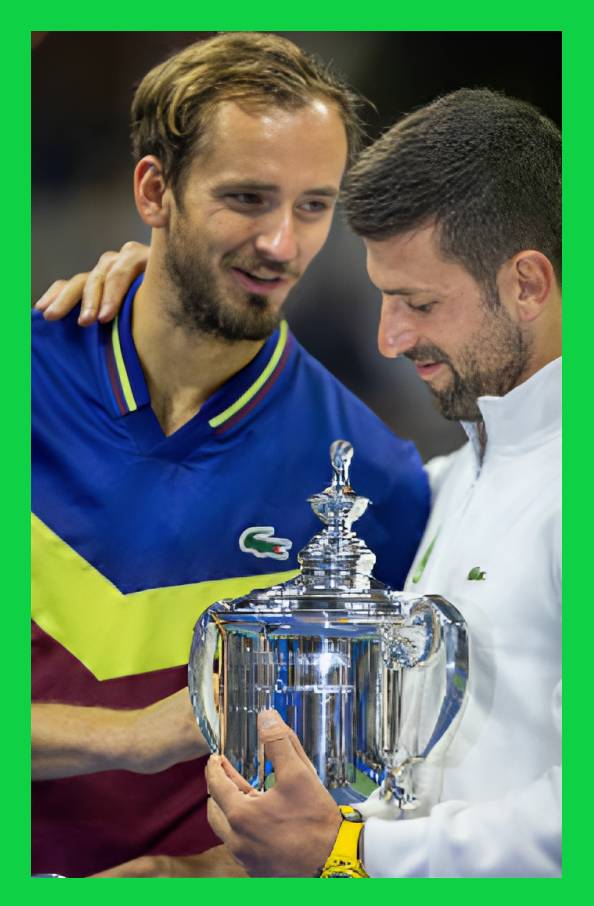
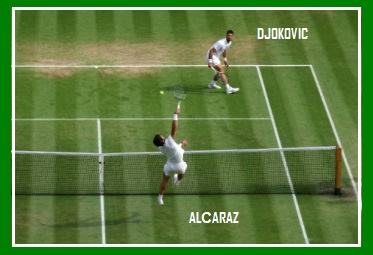
Margaret Court clinched her 24th and last major title half a century ago. She no longer stands as the sole record holder, as Novak Đoković has matched her achievement with his fourth US Open title. The tournament witnessed several upsets, but the three standout players of the season, Đoković, Daniil Medvedev, and Carlos Alcaraz, reached the semifinals, replicating their feat from Wimbledon ’23. However, there was a notable difference this time: Alcaraz had easily defeated Medvedev in the Wimbledon semifinal, but in New York, he succumbed to the Russian, losing 1-3.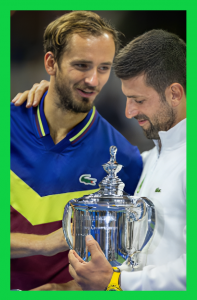
For the first time since 1995 (Wimbledon), four players ranked outside the Top 100 advanced to the fourth round of a Slam tournament. Among them, left-handed [128] Dominic Stricker‘s journey stood out. He ousted Stefanos Tsitsipas in the second round after a fiercely contested four-hour match. Stricker had saved a match point in a qualifying round.
One intriguing season story revolves around Ben Shelton. The young American, armed with a potent left-handed serve (149 mph), often loses in the early rounds this year but excels in Grand Slam tournaments. Following his quarterfinal appearance at the Australian Open, he continued his impressive run with a semifinal berth at the US Open. Shelton introduced a unique celebration during the fortnight, the ‘hang-up call’ which drew some playful mocking from Đoković after their semifinal clash.
In a significant retirement announcement, John Isner [157], one of the tallest players in tennis history, decided to conclude his career, 16 years after his professional debut. The 38-year-old giant’s farewell match embodied his career style, featuring multiple tie-breaks. Unfortunately, he squandered a match point, marking his 33rd (!) defeat of this kind (5th “best of five”), an infamous record. Also 31-year-old Jack Sock announced his retirement, but he appeared only in doubles. Meanwhile, Andrey Rublev, the 26-year-old Russian, continues to hold an infamous record of his own. He has lost all nine of his major quarterfinals, three of them to his compatriot and close friend Medvedev, always falling in straight sets despite promising starts in the opening set.
…1993…
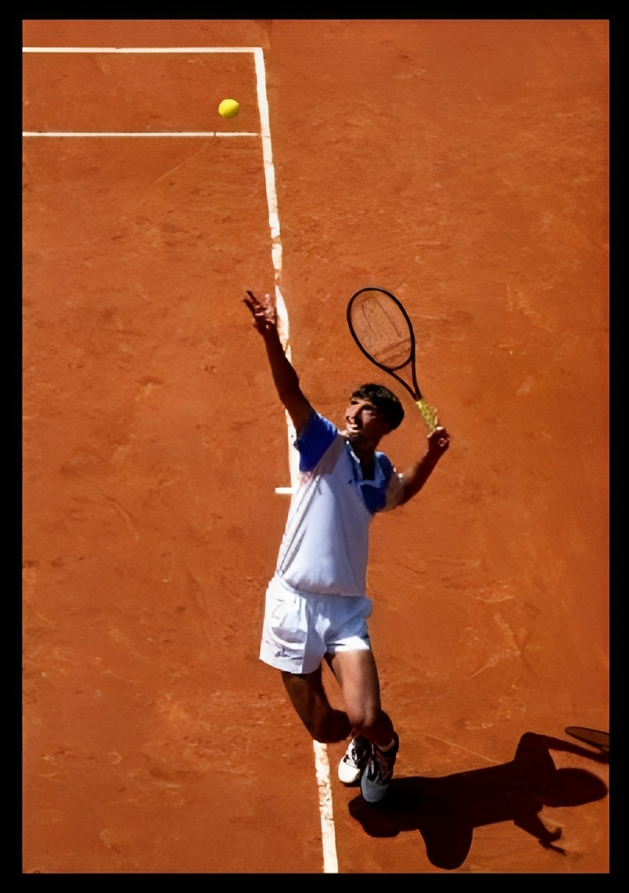
The tournament was marked by a series of peculiar and unusual occurrences: within the span of an hour during the first round, two of the four longest (at the time) Grand Slam tie-breaks in history took place (Mats Wilander and Goran Ivanišević emerged as victors, with scores of 18/16 and 20/18 respectively). During the fourth round, Wally Masur achieved the remarkable feat of winning the sole recorded Grand Slam match after trailing 0:5 in the deciding set. Wilander also played a role in creating the latest finish in the US Open history, with the match concluding at 2:26 a.m. This record would later be matched in both 2012 and 2015. Another enduring record was set when big servers Richard Krajicek and Todd Martin engaged in a marathon match lasting 5 hours and 11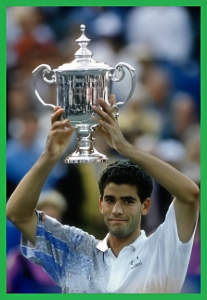 minutes (each of them won 193 points) – a feat that still ranks among the longest matches in the tournament’s history three decades later.
Seeds fell unexpectedly, with eliminations particularly notable, such as the two-time defending champion Stefan Edberg exiting in the second round. Adding to the intrigue, a player wielding an aluminum racquet (Prince Magnesium): 24-year-old Cédric Pioline, who had never secured an ATP title – astonishingly reached the final surviving tight five-setters in the two opening rounds. This achievement mirrored that of Mikael Pernfors from the French Open ’86, who partnered with his renowned compatriot Wilander to create the late-finish match in New York ’93. Wilander had entered the event with a ‘wild card’ and a ranking of 558, courtesy of Jimmy Connors‘ withdrawal.
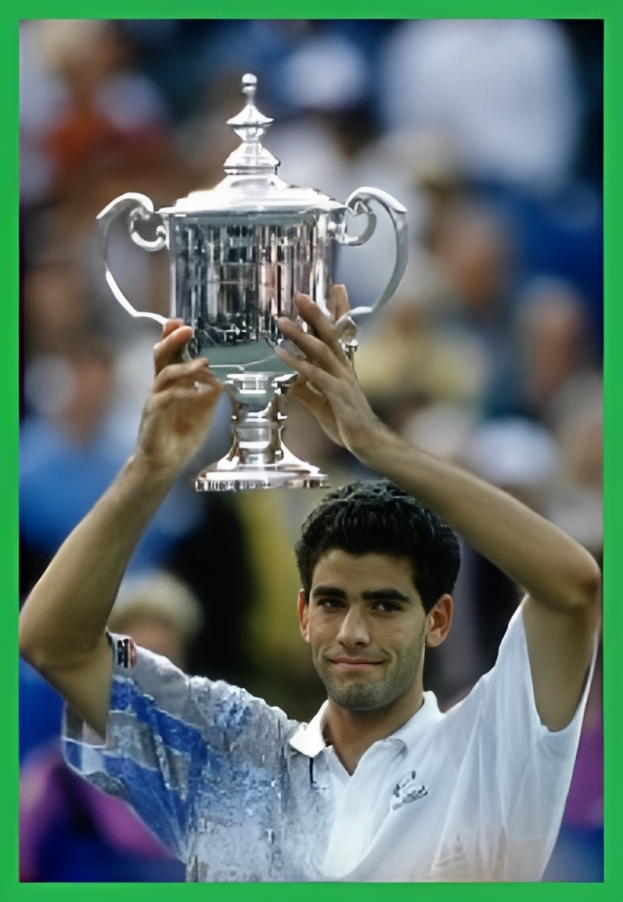
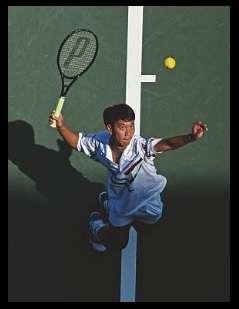
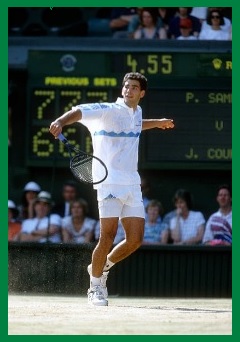
Pete Sampras stood above all, basking in the pinnacle of his career (a span extending from Key Biscayne ’93 to Rome ’94), and clinching his second US Open title with relative ease. His most formidable rival during that period, Jim Courier, was ousted by Pioline in the fourth round. In hindsight, this marked the inception of the decline of what appeared to be an intriguing rivalry in the 90s. Ultimately for Sampras, the prominent rival of the decade was Andre Agassi, who experienced an early-round exit. Despite losing to the emerging star Thomas Enqvist, Agassi’s disappointment was palpable. Faced with wrist problems, he made the decision to conclude his season at the three-quarter mark, with plans to make a comeback to the tour in February ’94… Sampras managed to overturn a previously unfavorable trend against Michael Chang, one of the four prominent American players born in the 1970s. Despite having a challenging Head-to-Head record of 2:6 against Chang, Sampras emerged victorious in the quarterfinal clash. This triumph marked the initiation of a remarkable six-match winning streak for Sampras over Chang. Interestingly, a similar pattern would unfold a decade later in the Roger Federer vs. Lleyton Hewitt rivalry (Hewitt led 7:2 before losing 15 straight times… it started here).
…Finals 2023…
US OPEN (hard semi-outdoors)
(2)🇷🇸Novak Đoković d. (3)🇷🇺Daniil Medvedev 6-3, 7-6(5), 6-3
…Finals 1993…
US OPEN ($4M; hard outdoors)
(1)🇺🇸Pete Sampras d. (15)🇫🇷Cédric Pioline 6-4, 6-4, 6-3
…2023…
Since 2011, the 48-draw event held in North Carolina has been functioning as a primary preparation opportunity leading up to the US Open (one event in a week prior to it since 2000, Winston replaced Long Island/New Haven). Unfortunately, many of the top players tend to skip it. This year, only one player from the Top 20, Borna Ćorić, participated. Despite leading 6:5* (30/0)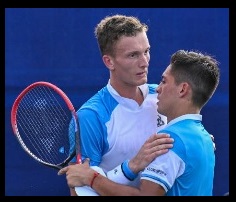 in the decider, Ćorić suffered a defeat in the semifinals. His loss in the deciding third-set tie-break is noteworthy, given that the Croat boasts the best record in tie-breaks of this kind, among players born in the 90s (an impressive 20-5 at the main-level, 24-8 counting all). His semifinal opponent, Sebastián Báez [42], has secured two titles in his last two appearances. Báez’s success in the United States comes as a surprise, especially considering that he is the shortest player within the Top 50 (standing at 170 cm). Before the arrival in North America, his performance outside of clay had been lackluster. Reflecting on his achievement, Báez expressed: “It’s nice to have that confidence, but now I have to think about my recovery after this week, and then after I will think about the US Open. I have a few days to recover and to focus again on a new tournament.” He’ll face Ćorić again in the first round, so they’ll play two matches against each other within five days.
…1993…
During the 1990s, New York hosted two smaller ATP events prior the US Open. In contrast to the 21st-century trend where top players often avoid playing in the week leading up to majors, the line-up at Long Island’s “Hamlet Cup” boasted excellence, including the participation of seven Top 10 players. Quite unexpectedly, the inconsistent Marc Rosset [30] emerged victorious.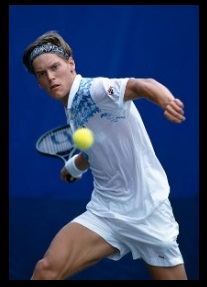 Rosset, who had struggled to string together three consecutive wins since March, suddenly found his form in the heat, securing five victories, with four of them against higher-ranked opponents.
The other event held in New York yielded a second title for Swedish teenager Thomas Enqvist [99]. He had been regarded as a rising star at the end of 1992 but faced numerous disappointments in the following season. Entering the event with only one victory in his last eleven matches, Enqvist’s trajectory deviated from the anticipated path towards the Top 20. Instead, he narrowly avoided dropping out of the Top 100. The future No. 1, Marcelo Ríos [379], played his first ATP qualifying event, and lost 6-7 in the 3rd set to Paul Kilderry, an Australian player who never advanced to the Top 100.
In the fourth edition of the “Croatia Open,” Thomas Muster successfully defended his Umag title. This marked Muster’s third championship within a span of four weeks. The runner-up, Alberto Berasategui, earned his first seeding at the ATP level and convincingly advanced to the final, benefiting from a walkover in the quarterfinals.
…Finals 2023…
Winston-Salem (ATP 250; hard outdoors)
(6)🇦🇷Sebastián Báez d. (5)🇨🇿Jiří Lehečka 6-4, 6-3
…Finals 1993…
Long Island ($275K; hard outdoors)
🇨🇭Marc Rosset d. (5)🇺🇸Michael Chang 6-4, 3-6, 6-1
Schenectady ($175K; hard outdoors)
🇸🇪Thomas Enqvist d. 🇳🇿Brett Steven 4-6, 6-3, 7-6(0)
Umag ($275K; clay outdoors)
(1)🇦🇹Thomas Muster d. (6)🇪🇸Alberto Berasategui 7-5, 3-6, 6-3
Top 10 after three quarter of the season:
1993: Courier – Sampras – Edberg – Becker – Bruguera – Stich – Chang – A.Medvedev – Krajicek – Ivanisevic
2023: Alcaraz – Djokovic – D.Medvedev – Rune – Ruud – Sinner – Tsitsipas – Rublev – Fritz – Tiafoe
…2023…
Australian players Max Purcell [70] and Alexei Popyrin [58] faced off in the qualifying round, with Purcell clinching victory despite trailing *1:4 (15/40) in the third set. Just a few days later, they were on the brink of another potential encounter in the semifinals. Popyrin entered the main draw as a lucky loser due to Karen Khachanov‘s withdrawal (the Russian had intended to return to the tour after being sidelined since the French Open). The quarterfinals marked a noteworthy achievement for both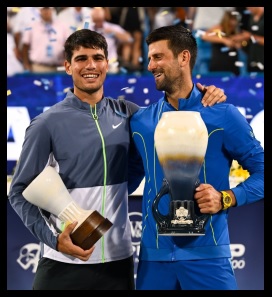 Australians, as it was their best result in a Masters 1000 event, propelling them to their first entry into the Top 50 ranking. Purcell is the only serve-and-volleyer inside the Top 100 now. In the quarterfinal against world’s best player, he stayed only 7 times on the baseline behind the serve, and this constant attacking allowed him to lead 4:3 in the decider.
Novak Đoković embarked on his first trip to the United States in nearly two years. His absence from American soil was due to his vaccination status, as he remained the only player within the Top 100 who had opted not to be vaccinated. His return was triumphant; the greatest player of the Open Era, secured his second Cincinnati title (the first being in 2018) under extraordinary circumstances. This victory came after the longest ATP final in history, in which he dashed Carlos Alcaraz‘s perfect record of 8-0 in deciding third-set tie-breaks (12-0 when considering all levels).
Never before in the Open Era had there been such a significant age gap between the two best players in the world, with Đoković holding a 16-year seniority over his toughest current rival. The upcoming US Open holds an intriguing promise. It’s challenging to envision anyone else lifting the trophy, and it’s highly likely that this New York event will play a pivotal role in determining the season-ending top spot. ”It’s amazing playing against you, sharing the court with you, learning from you,” Alcaraz told Djokovic during the trophy ceremony. “This match was really close, but I learned a lot from a champion like you. So congratulations to you and your team.”
…1993…
Two summer tournaments, the equivalents of the current “ATP 500,” held in Indiana and Connecticut during the same week, served as the final preparation for the best players in the world before the US Open. This pattern persisted through the 1990s (New Haven vanished from the calendar in 1999, while Indianapolis moved to an earlier week of the season, and also disappeared ten years later). The Indiana event marked the emergence of Patrick Rafter, a relatively unknown 20-year-old serve-and-volleyer from Australia. He advanced to the semifinals after an all-tie-break marathon against the world’s top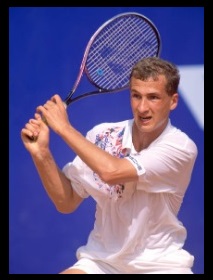 player, creating a sensation that opened the door for Jim Courier to regain the top spot. In the final, Courier finally found a way to defeat Boris Becker, having lost to the German in their previous six meetings.
In New Haven, the teenage sensation Andrei Medvedev confirmed his status as an all-court player. While he was initially associated with clay courts in his first twelve months on the tour, he reached the final in Halle on grass, and in Connecticut, he captured his first title on a hard court. This achievement was no fluke, as he ousted one of the biggest specialists on that surface, Andre Agassi, in a rain-interrupted battle during the semifinals. “I’ve never done anything like this before,” Medvedev said of his masterful serving vs Agassi (half of aces, 11, in the 1st set). “Not even in practice when there’s no one on the other side of the court.” A few moments after the final, a young boy approached the court to exchange a high-five with Medvedev; it was the son of his coach and future ATP player Alex Dolgopolov, who was just five years old at the time… The 7-time Grand Slam champion, Mats Wilander [575, WC], made his return to the court after a four-month hiatus, following his almost two-year absence. He lost 6-2, 5-7, 4-6 to Buff Farrow [409, qualifier], a 26-year-old American who in the 1980s could only dream of facing Wilander, the top player at the time. Farrow spent his time competing in Satellite tournaments during that era. This match marked only the second and final victory in Farrow’s ATP career.
…Finals 2023…
Cincinnati (Masters 1K; hard outdoors)
(2)🇷🇸Novak Đoković d. (1)🇪🇸Carlos Alcaraz 5-7, 7-6(7), 7-6(4) – 1 m.p.
…Finals 1993…
Indianapolis ($915; hard outdoors)
(2)🇺🇸Jim Courier d. (3)🇩🇪Boris Becker 7-5, 6-3
New Haven ($915K; hard outdoors)
(5)🇺🇦Andrei Medvedev d. (4)🇨🇿Petr Korda 7-5, 6-4
…2023…
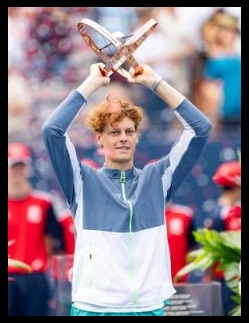
The nearly 22-year-old Jannik Sinner has currently found himself in a fortunate position when it comes to draws. His recent performance at Wimbledon highlighted it; he impressively reached his first major semifinal without facing a single opponent from the Top 30 in the five matches he won, an uncommon feat (93 – the average ranking of his rivals). The Canadian Open was no different, as he clinched the title without having to confront a Top 10 player, which is equally unusual in a 56-draw. Moreover, in the round of 16, Sinner was granted a pass due to his opponent’s withdrawal. Nonetheless it seemed a matter of time he would clinch a Masters 1K title already two years ago when he reached the Miami final.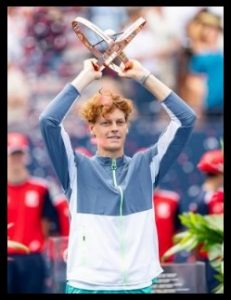
In the Toronto championship match he navigated past Alex de Minaur with relative ease. It’s worth noting that Sinner and De Minaur had crossed paths in a final four years prior, with Sinner emerging victorious in the NextGen. An intriguing twist was that “Demon” had been Sinner’s doubles partner during the Canadian Open, although the Italian/Australian duo suffered a defeat in the first round, which concluded in a super tie-break.
De Minaur – the highest ranked unseeded player – exhibited remarkable tenacity throughout the tournament. He notably rebounded from a set point down at 1:5* in the first set of the third round. Equally impressive was his comeback from a *1:5 deficit in a tie-break on the following day, with De Minaur securing “9/7” tie-breaks in the mentioned sets against higher-ranked opponents. The slender Australian has faced setbacks in his three recent ATP finals, all of which ended with rather one-sided defeats for him. Characterized as a counter-puncher lacking a robust acceleration on either wing, De Minaur’s strategy hinges on the missteps of more powerful players who wield dominant forehands. Unfortunately for him, they didn’t have bad days in this year’s finals (Queens Club, Los Cabos, Toronto).
The tournament also witnessed an impressive showing by tennis veterans who were once Top 10 mainstays. The 33-year-old Milos Raonic, buoyed by strong local support and holding a wild card ranking of 545, advanced to the third round, demonstrating his enduring prowess in the opening round. On the other hand, Gaël Monfils, four years Raonic’s senior and currently ranked 276 with a protected ranking, went a round further, with the distinction of being the sole player to capture a set off Sinner. Both Raonic and Monfils achieved victories against Top 10 players, reaffirming their competitive aptitude on the court… The support of local fans didn’t help Félix Auger-Aliassime to snap a bad streak. The Canadian has lost 8 out of his last 10 matches (four defeats in a row). At the end of 2022 he was the hottest player on the tour (three titles back-to-back), and I thought that with an improved backhand he’d attack the Top 5 this year, however, if the current form sustains, he will not finish this season in the Top 20.
…1993…
The early 1990s marked a noteworthy shift in tennis dynamics, as the importance of a powerful serve became more pronounced than ever before. This period led to discussions suggesting that taller players, at least 180 cm in height, would hold the significant advantage on faster surfaces. However, this theory faced a challenge during the ‘Mercedes Super 9’ events of summer ’93. In 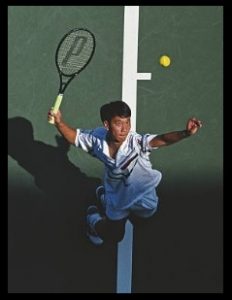 Montreal, Mikael Pernfors emerged triumphant, and in Cincinnati (Pernfors’ early exit), Michael Chang claimed the title; both players stood at a height of 173 cm (5’8”). Jason Stoltenberg found himself a victim of them both, facing defeat in the 2nd round in Montreal and the quarterfinals in Cincinnati. Chang’s last three matches proved demanding and unique in terms of total points won: the Chinese American won just two points more than Stoltenberg, ten points fewer against Andre Agassi (a surprising unseeded presence, his first after 76 consecutive events), and four points fewer than Stefan Edberg. A remarkable upset came from 23-year-old Steve Bryan [202, qualifier], who achieved the greatest success of his career by advancing to the quarterfinals. Bryan capitalized on Richard Krajicek‘s fatigue in the second round and stunned Andrei Medvedev the following day, only to face an insurmountable challenge in Pete Sampras, who was eliminated by Edberg in the match of the tournament. Edberg would again cross paths with Chang in the Cincy final the following year, that time resulting in a rather one-sided encounter.
As the best players converged in the United States to prepare for the US Open, one elite player diverged from the norm — Thomas Muster. Surveying the tournament’s draw, it was evident that defeating Muster in San Marino would be a daunting task. True to form, the Austrian navigated the week without dropping a single set. Yet, his final opponent, Renzo Furlan, elevated the competition, compelling Muster to invest two hours of effort before securing his 18th career title. Martín Jaite, no. 10 in 1990, played the last match of his career at the main-level at age of 29 in the “Italian” micro-state. Just one month later, he participated in a Challenger event in Venice, where he once again faced a first-round loss. This defeat marked his seventh consecutive loss, a streak that intensified the sense of bitterness and disappointment.
…Finals 2023…
Toronto (Masters 1K; hard outdoors)
(7)🇮🇹Jannik Sinner d. 🇦🇺Alex de Minaur 6-4, 6-1
…Finals 1993…
Cincinnati ($1.4M; hard outdoors)
(7)🇺🇸Michael Chang d. (3)🇸🇪Stefan Edberg 7-5, 0-6, 6-4
San Marino ($275K; clay outdoors)
(1)🇦🇹Thomas Muster d. (6)🇮🇹Renzo Furlan 7-5, 7-5
…2023…
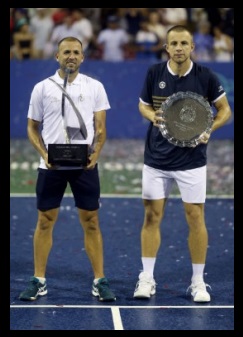
Although the rain-interrupted final in the US capital featured seeded players, predicting this outcome at the start of the week would have been quite audacious. Both Daniel Evans and Tallon Griekspoor, with ages of 33 and 27 respectively, hadn’t previously competed at this level. Unfavorable weather conditions played a significant role; top-seeded Taylor Fritz had to endure two matches on Friday, lasting a total of 4 hours and 21 minutes. As a result, his energy was depleted by the mid-2nd set during the semifinal against Griekspoor. While Evans exhibits technical brilliance, his consistency has often been lacking. Arriving in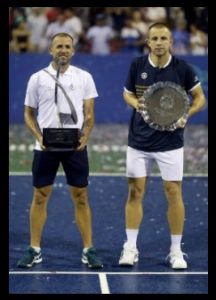 Washington with a 1-8 record since his semifinal appearance in Barcelona in April, he dropped his opening set. However, he astonishingly turned the tide, securing ten consecutive sets without being seriously threatened. Reflecting on his journey, Evans remarked: “I wasn’t playing very well and I wasn’t happy with my game. To do the work I’ve done and to stick with it and come through is amazing. The last game sort of summed up my week. I got out of trouble [he saved four break points]. I really appreciate all the support.”
In the other hardcourt event of the week, Stefanos Tsitsipas improved his relatively modest finals record (10-17). He outplayed Alex de Minaur in the championship match, who had aimed to secure two titles this year in Mexico. Among the Head-to-Head matchups of elite players born in the 90s, the Tsitsipas vs. De Minaur rivalry is the most lopsided, with Tsitsipas leading 10-0 (including the NextGen final). Tsitsipas consistently dominates the encounters, often securing straightforward sets due to the overpowering speed of his forehand, which proves too daunting for De Minaur’s grinding style of play.
Dominic Thiem emerged as a contender for the world No. 1 spot following his victory at the US Open ’20 and his appearance in the ‘Masters’ final a few months later. However, subsequent injuries began to plague him, leading to an extended break, a dip in form, a parting of ways with his coach Nicolás Massú, as well as mounting frustration stemming from heart-wrenching defeats (for instance 6-7 to Tsitsipas twice in deciding sets this year). Finally, almost everything clicked for Thiem at his home Austrian event. Thiem, ranked 116th and competing as a wild card, adeptly navigated through challenging situations, particularly in the first round where he staved off seven set points across two sets, and in the semifinal where impressively, he overcame five match points. Despite his valiant efforts, Thiem found himself overmatched in the final against Sebastián Báez. The Argentinian, a diminutive player at 170 cm, has specialized in clay courts due to their reduced emphasis on serving. Worth noting is Alex Molčan‘s remarkable comeback, one of the most impressive “best of three” turnarounds in the Open Era. The talented left-handed Slovak rallied to defeat Sebastian Ofner 4-6, 7-5, 7-6 in round two, saving two match points at *0:5 in the 2nd set (with Ofner also leading 6:5*, 30/0 in the 3rd set).
…1993…
It’s a rare occurrence for a player to secure a title while being on the brink of defeat in three matches within a week (one game at least). This remarkable feat only happens once every few years, and it unfolded in California. Richard Krajicek [10] clinched his first title of the year despite being just 2, 4, and 2 points away from defeat in the second round, semifinal, and final, respectively. His journey was a nail-biting one, with moments of survival and resilience. In the second round, Krajicek 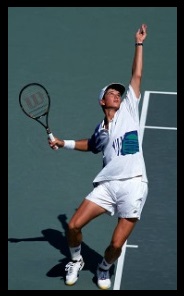 faced a challenging battle against Jason Stoltenberg. After dropping the opening set, he found himself trailing 2:5 in the second-set tie-break. However, he managed to turn the tide and narrowly escaped defeat before destroying his opponent in the decider. The semifinals presented another intense serve-and-volley showdown, where Krajicek emerged victorious against Pete Sampras, marking his first triumph in their competitive Head-to-Head which ended 6-4 for the Dutchman. The final, lasting 2 hours and 38 minutes, witnessed an amazing turnaround. Despite a disastrous start (seven games lost in a row), Krajicek’s determination shone through. Although he was unable to break Michael Chang‘s serve in 15 tries, he displayed exceptional prowess in two tie-breaks. Notably, this encounter marked their third meeting where a deciding tie-break was essential, with Krajicek ultimately securing a 2-1 edge in those matches. Reflecting on his triumph, Krajicek revealed his mental approach, after changing his racket with the new balls: “I was thinking that a 6-0, 6-0 result in the final wouldn’t be satisfying. I told myself, ‘Now, I must make it happen. I need to take action to create a competitive match.’ With a fresh start and a new attitude, I pretended I was trailing 1:0 and chose to put the first set behind me.” Krajicek’s remarkable victory earned him a prize of $39,600 and a unique place in the history of the Los Angeles tournament. He became the first repeat winner since Jimmy Connors achieved the feat in 1973-74.
Kitzbühel. Thomas Muster, one of the biggest clay-court specialists of the 90s, only once triumphed in the biggest tournament on clay in his home country. He participated in 15 editions of the Austrian Open (regularly in the years 1984-1998, excluding 1989 when he was seriously injured, and again in 2011 when made a bizarre comeback at age of 44). Muster’s quest for victory in 1993 was an arduous one. Navigating through a challenging draw, Muster faced formidable opponents en route to the title. In the semifinal, he confronted Andrei Medvedev, a player he had previously struggled against, losing twice in a row in straights to him. In the final Muster faced Javier Sánchez, who had secured back-to-back wins against Muster in the events leading up to the clash in the Alpine town. Nine days earlier in the Hilversum quarterfinal, the member of the famous Spanish family defeated Muster 6-4, 5-7, 6-3, so the score of each set was repeated in their final, but all sets went to Muster’s account in a two-day contest (suspended on Sunday due to rain). Notably, this triumph came during a period when the tournament boasted a 48-player draw, later reduced to 32 in 2008. The event’s status fluctuated over the years, transitioning from an ATP 500 tournament to a Challenger event in 2010, and ultimately settling into a 28-player draw format starting in 2011.
Sergi Bruguera embarked on a distinctive path by skipping the grass-court season to continue his dominance on clay. While he experienced success in Gstaad, his journey was marked by surprising setbacks in Stuttgart and Hilversum. The city of Prague in the newly formatted Czech Republic, witnessed Bruguera’s triumphant display against Andrey Chesnokov in a two-hour final. Bruguera showcased his resilience by rallying from a 2:4 deficit in the opening set – the sole set during the entire week where he found himself trailing. This tournament also marked the emergence of Jiří Novák [584, WC], an 18-year-old Czech talent whose future achievements would solidify his legacy as one of his country’s finest players post the dissolution of Czechoslovakia. Novak won his ATP debut in a dramatic fashion, but in the second round got a lesson from Bruguera… Despite the lowest prize money in the week, Los Angeles attracted better players than two clay-court events.
…Finals 2023…
Washington (ATP 500; hard outdoors)
(9)🇬🇧Dan Evans d. (12)🇳🇱Tallon Griekspoor 7-5, 6-3
Los Cobos (ATP 250; hard outdoors)
(1)🇬🇷Stefanos Tsitsipas d. (5)🇦🇺Alex de Minaur 6-3, 6-4
Kitzbühel (ATP 250; clay outdoors)
🇦🇷Sebastián Báez d. (WC)🇦🇹Dominic Thiem 6-3, 6-1
…Finals 1993…
Los Angeles ($275K; hard outdoors)
(4)🇳🇱Richard Krajicek d. (3)🇺🇸Michael Chang 0-6, 7-6(3), 7-6(5)
Kitzbühel ($375K; clay outdoors)
(3)🇦🇹Thomas Muster d. (6)🇪🇸Javier Sánchez 6-3, 7-5, 6-4
Prague ($340K; clay outdoors)
(1)🇪🇸Sergi Bruguera d. (3)🇷🇺Andrey Chesnokov 7-5, 6-4
…2023…
It has been 15 years since the “German Open Tennis” lost its prestige and was downgraded from a Masters 1K event to an ATP 500 tournament. Alexander Zverev, a native of Hamburg, kickstarted his remarkable career in his birthplace back in 2014 when, as a 17-year-old boy, he made it to the semifinals. However, it took him nine long years to finally claim the championship trophy, marking 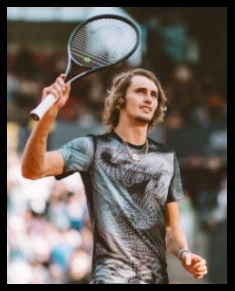 his first title in a year and a half. The moment he clinched the victory was deeply emotional, as he fell to his knees with tears of joy in his eyes. “This is my home, where I grew up and started playing tennis,” Zverev expressed, overwhelmed with the significance of the win. “It was an incredible and emotional experience. I can’t find the right words to describe it; I’m just extremely happy right now. It feels almost like my first title again.” Due to adverse weather conditions, Zverev’s last two matches were played indoors, and impressively, he didn’t even have to face a tie-break throughout the week. This triumph marks his 20th title, with only three members of the “Big 4” having won more titles among active players.
The Australian players had a fantastic week as well, with Aleksandar Vukic (of Montenegrin origin) reaching the final in Atlanta and Alexei Popyrin (of Russian origin) capturing the title in Umag. Vukic’s unexpected journey in Georgia surprised many, given that he had mainly been competing at the Challenger level for several years, with just two ATP quarterfinals in his resume. On the other hand, Popyrin has found himself in the past few years hovering between the 70th and 100th rankings, alternating between Challengers and main-level events, occasionally having to play qualifying rounds for big tournaments. He possesses the skills that could easily put him among the Top 30 players in the world, he just needs to be consistent with his results. In the last set of the “Croatia Open”, he overcame cramps and a *3:4 (0/30) deficit… he was six points away from defeat also in a three-hour semifinal. Worth noting: 17-year-old Dino Prižmić, ranked 287th, reached the quarterfinals in Umag in only his second main-level appearance, both of which occurred on Croatia’s Istrian peninsula. Meanwhile, his renowned compatriot, Marin Čilić, 17 years his senior, returned to the tour after a seven-month absence (knee surgery) during which he dropped from no. 17 to 100 in the rankings. Taylor Fritz, who claimed a title in the first event during the Summer season on hardcourts in North America, wasted two match points in the 2nd set of the final – the same happened to him earlier this year as he’d triumphed at Delray Beach.
…1993…
Thirty years later, it is still baffling how Mikael Pernfors triumphed in Montreal without having won an ATP title for nearly five years. Pernfors, a runner-up in the 1986 French Open, was once regarded as part of the broader elite group in the second half of the 1980s. However, a series of injuries, including knee and tendon issues from the early 1990s, hampered his progress, and he had managed only two minor titles at the main level. At one point, his ranking dropped as low as No. 1095 forcing him to seek points in the Satellites. However, the resilient 30-year-old made a comeback to the Top 100, thanks to three Challenger titles. His Canadian victory over 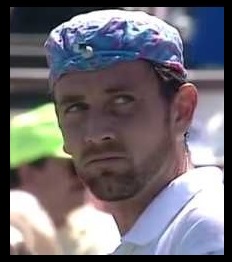 Jason Stoltenberg in the second round was already considered an upset, but then he achieved the unimaginable by defeating the World No. 2, Jim Courier, with a convincing score of 6-3, 6-2. Notably, just a few months earlier, Pernfors had lost to Courier 0-6, 3-6 at Key Biscayne. Courier admitted: “Everything was wrong. Mikael played very well and let me beat myself.” This win bolstered Pernfors’ self-confidence, enabling him to overcome higher-ranked left-handed opponents in straight sets in his next two matches. Pernfors’ last hurdle was the 23-year-old Todd Martin, who reached a career-best achievement at that time by advancing to the final. Initially, the tall American seemed to have the match in the bag, given his height advantage of 25 cm, superior serving, and aggressive receiving. Despite Martin leading 5:2* in the decider, he faltered due to tentative play, allowing Pernfors to seize the opportunity with his agility. Consequently, Pernfors secured the title after an impressive comeback, arguably the best in his career. Unfortunately, for Martin, he was never again as close to winning a tournament featuring the world’s best players during the next ten years, while Pernfors returned to the position he held before that miraculous week in Canada. At the end of 1993, Pernfors won a Challenger event in Bermuda, actually marking the end of his career.
In an upset during the second round in Hilversum, Sergi Bruguera was eliminated in straight sets by the crowd favorite, Paul Haarhuis; the Dutchman often raised his level of play with the enthusiastic support of the home crowd. Although only one seeded player advanced to the quarterfinals, the lineup of the last eight was still strong, comprising players who had all previously won ATP titles. The final saw Carlos Costa dominate Magnus Gustafsson, snapping his 9-match winning streak, as Costa rediscovered his 1992 form when established himself as a clay-court specialist. However, his mixed participation on clay, grass, carpet, and hardcourts had a negative impact on his clay-court performances the following year.
…Finals 2023…
Hamburg (ATP 500; clay semi-outdoors)
(4)🇩🇪Alexander Zverev d. 🇷🇸Laslo Đere 7-5, 6-3
Umag (ATP 250; clay outdoors)
🇦🇺Alexei Popyrin d. (6)🇨🇭Stan Wawrinka 6-7(5), 6-3, 6-4
Atlanta (ATP 250; hard outdoors)
(1)🇺🇸Taylor Fritz d. 🇦🇺Aleksandar Vukic 7-5, 6-7(5), 6-4
…Finals 1993…
Montreal ($1.4M; hard outdoors)
🇸🇪Mikael Pernfors d. (13)🇺🇸Todd Martin 2-6, 6-2, 7-5
Hilversum ($235K; clay outdoors)
🇪🇸Carlos Costa d. 🇸🇪Magnus Gustafsson 6-1, 6-2, 6-3
…2023…
Since 1987, it has been a tradition for Gstaad and Newport to be the first events after Wimbledon. Båstad replaced Boston as the third post-Wimbledon event in 1990. Historically, better players chose Switzerland over Sweden, but it was not the case 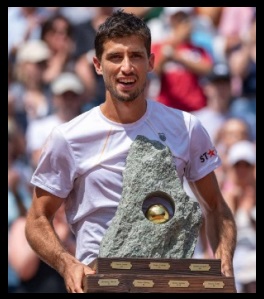 this year; four top 20 players arrived at the Swedish coast, while no one from the Top 20 in the Swiss Alps. Casper Ruud, who had won Gstaad twice in a row, chose Båstad this time (he likes to collect ATP 250 titles). However, in the final, he faced Andrey Rublev, who has been super consistent this year, and the Russian claimed his 14th title. In Gstaad, Pedro Cachin [90] captured his maiden title. The 28-year-old Argentinian was little known prior to this year, but reaching the fourth round in Madrid certainly helped him believe he could win an ATP title. “In the beginning of the match, I was a little nervous and made a few mistakes. It was the first time I had played against a lefty in the tournament, but I stayed there,” Cachin said after the final, in which four points separated him from defeat. “I tried to be positive, more aggressive, and go to the net. In a final, it is difficult to play like this the whole match. I am very, very happy.” The Hopman Cup has returned to the tennis calendar after a four-year absence. The event, which was traditionally held in Perth (January) from 1989 to 2019 for eight teams, has been moved to Nice (July), with the hardcourt surface replaced by clay, and six teams were invited for the new opening. The Hopman Cup represents an exhibition status, so the two biggest stars (Carlos Alcaraz, Holger Rune) didn’t seem to be playing at their 100%. As a consequence, they didn’t push their teams to the final. Croats (Donna Vekić, Borna Ćorić) took advantage of it, however, they had to save a match point in mixed doubles against Spain to move through to the final. Croatia had won that event once before, in 1996 (Iva Majoli, Goran Ivanišević)… 37-year-old Kevin Anderson decided to come back to the tour after more than a year break, and advanced to the quarterfinal in Newport. Two teenagers noticed good results this week: Serb Hamad Međedović [183] advanced to the Gstaad semifinal (he actually turned 20 during the week) while one year younger Alex Michelsen [190] of the United States, played the Newport final in his just second main-level appearance. The current best Swedish player, Mikael Ymer [51] couldn’t play in his home country tournament because he has been suspended for 18 months for violating anti-doping rules: “I find it difficult to comprehend that they found an 18 month suspension to be a just punishment. I do not believe I broke those rules and my conscience is clear with God as my witness.” He is another suspended Top 100 player following Polish Kamil Majchrzak who cannot play in 2023.
…1993…
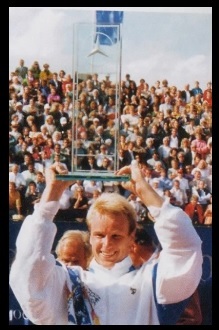
Sergi Bruguera was the main favorite to win the title in Stuttgart. He was on a 15-match winning streak, not being seriously threatened in the meantime. So it was quite shocking that he wilted in the third set against his compatriot (Basque though),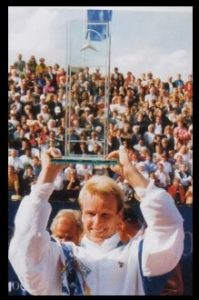 Alberto Berasategui [91]. Berasategui was little known at the time, but this victory gave him wings, and he began to be one of the most dangerous clay-courters; in 1994, he advanced to the French Open final, where he lost to… Bruguera. Magnus Gustafsson, who claimed the biggest title of his career, came back from a 2:4 deficit in the deciding set of the final. At 4-all, he fought off three mini-match points with the help of his ad-court serve, delivered from an extreme position, close to the tramlines. The 1992 edition of The Mercedes Cup gathered the best line-up in history, but the following year wasn’t bad either – there were three Top 10 players. “Probably the best I’ve played in three years,” Amos Mansdorf told the crowd of 7,041 after triumphing in Washington D.C. “At this point in my career, I’m very much in control out there. I know when the big point is coming, and I was ready today every time we played a big point. Playing 10 years on the tour helped with that.” The 28-year-old Mansdorf saved three set points in the opener. “He’s had a couple of early losses lately, and everyone on the tour takes notice of that – that Lendl isn’t invincible anymore,” said Robbie Weiss [138] after a 2-6, 7-6, 6-4 second-round win over Ivan Lendl. It was Lendl’s sixth defeat in seven matches – at the time it was pretty obvious that the time of the best player of the 80s, then 33 years old, is counted, and he couldn’t be considered among favorites to win the biggest titles anymore.
…Finals 2023…
Bastad (ATP 250; clay outdoors)
(2)🇷🇺Andrey Rublev d. (1)🇳🇴Casper Ruud 7-6(3), 6-0
Gstaad (ATP 250; clay outdoors)
🇦🇷Pedro Cachin d. 🇪🇸Albert Ramos Viñolas 3-6, 6-0, 7-5
Newport (ATP 250; grass outdoors)
(2)🇫🇷Adrian Mannarino d. 🇺🇸Alex Michelsen 6-2, 6-4
“Hopman Cup” – Nice, clay outdoors
Croatia d. Switzerland 2-0
…Finals 1993…
Stuttgart ($915K; clay outdoors)
(16)🇸🇪Magnus Gustafsson d. (2)🇩🇪Michael Stich 6-3, 6-4, 3-6, 4-6, 6-4
Washington ($500K; hard outdoors)
(8)🇮🇱Amos Mansdorf d. (7)🇺🇸Todd Martin 7-6(3), 7-5
…2023…
Players who were supposed to face each other in the semifinals a year before, Rafael Nadal and Nick Kyrgios, withdrew from this year’s Wimbledon. Nadal’s absence was confirmed even before the French Open, while Kyrgios pulled out after the draw was made. If the ATP points had been given last year, Nadal would have been disappeared from the ranking now. Another potential quarterfinalist, Karen Khachanov, didn’t participate as he was expecting the birth of his second child. 36-year-old Jérémy Chardy (ranked 542nd, so not enough to even play main-level qualifying rounds), who did not play at all in 2022, used his protected ranking wisely this year. He chose only a few biggest events. In the first round in London, he found himself on Centre Court against the world’s top-ranked player, and he saw it as a good opportunity to ‘bid adieu’.
The first week of the event was quite challenging due to adverse weather conditions. Rain disrupted play on the second day, leading to a peculiar situation where two players advanced to the third round while several first-round matches didn’t even start.
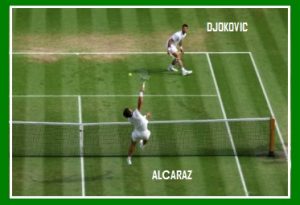 Overall, it was a fascinating event showcasing a clash of three generations. The semifinals (both played indoors) featured the three distinctively best players of the season, each representing a different generation: Novak Đoković (born 1987), Daniil Medvedev (born 1996), and Carlos Alcaraz (born 2003). Jannik Sinner found himself in the best four at a major for the first time, benefiting from an easy draw. However, considering recent years, he deserved a favorable draw (four times had lost major quarterfinals, three times to the eventual champions). Đoković easily prevented what many believed could be the first chapter of a future rivalry on the biggest stages between Alcaraz and Sinner. Personally, I’m more skeptical about that and see Holger Rune (quarter-finalist this edition) as more gifted than Sinner, with a brighter future ahead for the Dane.
The final was an electrifying battle between two mental giants separated by 16 years, marking the second-largest age gap in the Open Era as far as the finals are concerned (Jimmy Connors destroyed 18 years older Ken Rosewall in two major finals in 1974). Alcaraz started the final in a worse fashion than anyone could have expected, but he then won all the crucial points, including a marathon game in the mid-3rd set, consisted of 13 deuces, which is the longest in Wimbledon finals. Alcaraz is a complete player, and I expect him to follow in the footsteps of Björn Borg, becoming the first man since the early ’80s to win Roland Garros and Wimbledon titles in the same season a few times.
The event was also notable for Russian players, who were unable to compete the previous year due to political reasons. Three Russians reached the quarterfinals, including Roman Safiullin [92], who hadn’t even played an ATP final yet. Andrey Rublev lost at this stage for the eighth time, securing him an infamous record in this regard.
…1993…
Sergi Bruguera [5] played more clay-court matches than anyone else before Wimbledon ’93. After claiming his first major title, he made the decision to skip the grass-court season. As a result, he arrived in Swiss Alps feeling fresh and was not only the favorite to win the title, people expected him to do so without dropping a set. And that’s exactly what he did. His hunger for tennis and freshness were particularly evident on Sunday. Due to rain, his semifinal was suspended at 3-all in the first set. After the resumption, he won nine straight games and started the final an hour later with great energy. Similar to the previous year, he won the final in two sets (normally the finals of the event were in ‘best of five’ format until 2007). “I feel like I’m improving from year to year, and the win in Paris has significantly boosted my self-confidence,” said Bruguera. “The last five times we met, I beat him (Novacek) quite easily, so I guess he didn’t know how to handle me.” 8-0 in their H2H in the end.
I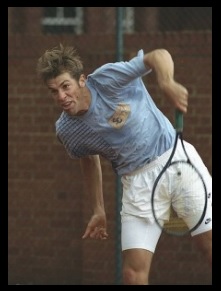 n the Swedish summer resort of Båstad, players of lower rankings participated, compared to those who came to Switzerland that week. Despite having six Swedes seeded, none of them advanced to the final. The tournament concluded with the victory of Horst Skoff, ranked 82nd at the time, securing his fourth and final title. Although he was only 25 years old, Skoff was already past his prime, and two years later, he would lose his status of a main-level player. The runner-up, four years older Ronald Agénor, played eighth and last ATP final in his career, but he would enjoy a better year 1994 than Skoff. En route to the final Agénor scored a win over Lars Jönsson with the help of the longest deciding tie-break of the season (14/12)… Jan Gunnarsson [342, lucky loser], the Aussie Open ’89 semifinalist, struggling a few years with a knee injury, played his last ATP match at age of 31 losing in the second round.
In the last grass-court event of the season in Newport, where only three Top 100 players entered the draw, 19-year-old Greg Rusedski [151], lifted the trophy after a week of hard work. The left-handed Canadian showcased a lethal serve in his sixth main-level event, playing eight tie-breaks and registering a 5-3 record in them. His last two matches were closely contested, with both almost going the full distance in terms of the scoreline. In the semifinals, he won a no-break point match against Alex Antonitsch 7-6, 6-7, 7-6. In the second set of the all lefty final, he squandered two match points, and his opponent served for the match at 5:4 in the third set but failed to close it out. These dramatic matches became a recurring theme in Rusedski’s career, as he was regularly involved in similar encounters over the years (25-20 in deciding third-set tie-breaks towards the end of his career). This victory marked only the second time a Canadian won a main-level title, with the previous occurrence being Mike Belkin‘s triumph at St. Petersburg in 1971. Rusedski gained crucial confidence at Wimbledon ’93 where he faced one of the best grass-court specialists in history and narrowly lost in a tight four-set match. Top seeded, the double Newport defending champion Bryan Shelton was ousted in the first round.
…Finals 2023…
WIMBLEDON (£44.7M; grass semi-outdoors)
(1)🇪🇸Carlos Alcaraz d. (2)🇷🇸Novak Đoković 1-6, 7-6(6), 6-1, 3-6, 6-4
…Finals 1993…
Gstaad ($375K; clay outdoors) – Week 27
(1)🇪🇸Sergi Bruguera d. (3)🇨🇿Karel Nováček 6-3, 6-4
Bastad ($235K; clay outdoors)
🇦🇹Horst Skoff d. 🇭🇹Ronald Agénor 7-5, 1-6, 6-0
Newport ($175K; grass outdoors)
🇨🇦Greg Rusedski d. (3)🇦🇷Javier Frana 7-5, 6-7(7), 7-6(5)
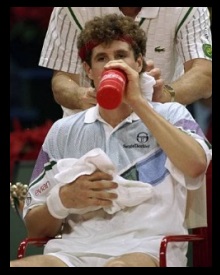 Richard Fromberg [40] emerged as the standout player that Davis Cup quarterfinal weekend (16-18.07… Week 28), winning two vital matches – as the only one – he did it without dropping a set. In the decisive rubber against Stefano Pescosolido in Florence, Italy, Fromberg secured a victory of 7-5, 6-1, 6-4 for Australia. The tall Aussie had played in the Davis Cup final already three years before. Meanwhile, there was a major upset in Fréjus (small city at Côte d’Azur), where Henri Leconte‘s poor performance due to back problems in the first two days, led the team captain to assign Rodolphe Gilbert (his lone Davis Cup appearance) to face the experienced Ramesh Krishnan [231] in the decisive rubber. The match was suspended due to darkness with a 4-all score on Sunday and resumed on Monday; in just 13 minutes, Krishnan sealed the victory with a scoreline of 2-6, 6-4, 4-6, 7-5, 6-4. “When we arrived here, we didn’t expect to be in this position,” Krishnan remarked. “France was a much stronger team, but it was an excellent opportunity for us.” Gilbert had had a 4:2* lead on Sunday before the match was halted, and he wasted two mini-match points on the following day.
In the Hague, the absence of the injured Jacco Eltingh proved detrimental to the Dutch team. Without him, they were unable to secure the expected point in doubles. Richard Krajicek also disappointed by losing in straight sets to Magnus Larsson, resulting in the tie being decided on Saturday. On the same day, Germany secured their place in the semifinals in the only grass court tie of the weekend (the other three were on clay). The clash of neighbours in Halle was highly entertaining, featuring 13 out of a possible 15 sets in the first two days, with five of them going to tie-breaks. Michael Stich defeated Karel Nováček in a rain-interrupted battle that was suspended at 3-all in the second set. Nováček was close to defaulting, had a 30/0 lead on Stich’s serve at 5-all in the deciding set but failed to break; frustrated by some line calls in that crucial game, he expressed his anger by throwing a towel towards the umpire during the last change of ends. Ultimately only a point was deducted from him.
Quarterfinals (host first)
Italy – Australia 2-3, France – India 2-3, Netherlands – Sweden 1-4, Germany – Czechia 4-1
…1993…
Wimbledon ’93: in my opinion the most significant major of the ’90s. Admittedly, Pete Sampras came to London as the No. 1 player in the world, but with only one Grand Slam triumph, which he captured three years earlier (US Open ’90). Sampras’ right shoulder had been bothering him before the tournament, almost forcing him to withdraw, and it reminded him of its presence a couple of times in the first few rounds (especially in the opening match when he was close to trailing 1-2 in sets against a much inferior player). However, ultimately, it wasn’t an obstacle for him to play nearly perfect tennis in the second week, having an antidote for different styles he faced: Sampras defeated Andre Agassi (the defending champion; an offensive baseliner), Boris Becker (a three-time former champion; a serve-and-volleyer), and Jim Courier (the best player of the 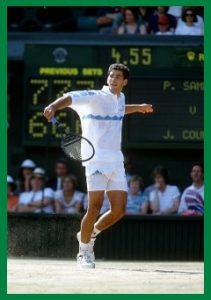 past two years; a mix of both styles earlier mentioned) in back-to-back matches! It must have been a tremendous boost of self-confidence that allowed him to dominate at the All-England Lawn Tennis & Croquet Club for the next seven years. Moreover, it halted Courier’s momentum in the early 90s. Admittedly, he was only 23, but he already achieved something that no one had done since 1969; he reached the major finals in Australia, France & England within a season (no one could repeat it until Roger Federer surpassed Courier by reaching all major finals in 2006). Besides he was the youngest man to play all four Slam finals. At the time, it was incomprehensible that “versatile” Courier wouldn’t play another Slam final, yet he did not reach one for another six years of his career.
At a lower level of American tennis, there was another significant encounter that year at Wimbledon which altered the paths of two careers. Todd Martin defeated David Wheaton in a dramatic five-set match in the fourth round. Subsequently, Martin thrived in the ’90s and ultimately became the fifth-best US player of that generation, something which Wheaton could have taken for granted as he triumphed in the most lucrative event of the 90s (Grand Slam Cup ’91). Martin won two five-setters against big servers in back-to-back matches when it seemed he was destined to lose in four sets. In the third round, he escaped from *2:4 (0/40) in the fourth set against Goran Ivanišević. Against Wheaton, Martin faced an arguably tougher situation as he trailed 0:3 with a double break down in the fourth set. Ivanišević fell victim to playing too many sets, having gone to the maximum of 15 sets in the first three rounds, barely winning the first two matches (he saved four mini-match points in the first round and a match point in the second round – with a second serve ace; both extremes occurred in fifth sets he won respectively 6-4 and 9-7). A similar fate awaited Michael Chang, who was not considered among the favorites, unlike Ivanišević. Chang, who had won two five-setters 6-4 in the fifth sets, lost 4-6 in the fifth set to Wheaton after 4 hours and 22 minutes, which remained the longest match of the event until the end of that edition.
Andrew Foster [332] became a second-rate hero of the event. The 21-year-old Brit, playing thanks to a wild card, advanced to the fourth round where he almost stole a set from Sampras (led *5:3 in a tie-break), giving joy to the local fans who were hopelessly awaiting their own representative in the quarterfinals of the years 1974-95. Foster finished his career with the highest ranking at 184 (only one Challenger final), which is extremely low for someone who reached the “sweet sixteen” at majors, but it was the reality of the first three decades of the Open Era: serve-and-volley players could compete on equal terms on grass against much higher-ranked opponents who were not familiar with this style of play. Foster was very fortunate in the third round because his opponent Andrey Olhovskiy (who’d caused the biggest sensation of 1992 by defeating Courier at Wimbledon) withdrew midway through their match, complaining of flu-like symptoms.
A few more words about the defending champion – Agassi. Since the late 80s known for some controversies, Agassi shocked that time with a new technique of his serve (shortened preparation with his arm, caused by wrist injury; he displayed it for the first time actually a few weeks earlier during his early upset in Halle) and an alleged relationship with Barbra Streisand, famous American actress & singer, 28 years his senior. She was sitting in a box during his matches along with his brother and the closest friend. “We are simply people who enjoy being around each other and we’ve been around each other in all circumstances,” he explained.
…2023…
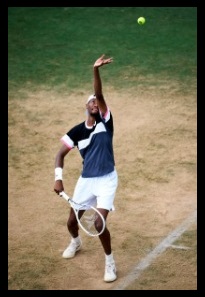 The last two grass events prior to Wimbledon are of little importance. Only two Top 10 players decided to participate in them, and both were ousted in their opening matches. This created opportunities for lower-ranked players to enhance their modest collection of titles. Francisco Cerúndolo [19], who won in Eastbourne, captured his second title, while Christopher Eubanks [77], the best in Mallorca (these particular grass courts tend to lose their lush green appearance and become more bare and patchy already after a few days of playing), secured his maiden title. Cerúndolo’s victory marks the first time an Argentine has won an ATP title on grass since 1995 (Javier Frana in Nottingham). He made one of the best comebacks of the season in the semifinals, as he trailed Mackenzie McDonald 2-6, 1:4 with a double break. Eubanks was on the verge of losing two matches: first in the second round, where he was two points away from defeat, and then in the semifinals, where he needed to save five match points (including a triple match point) against Lloyd Harris. “It just means the world, man,” Eubanks said. “[…] It’s just a testament to the hard work. Now I just want to keep working even harder to experience this feeling even more.” Eubanks, who was relatively unknown until the end of the previous season, showcased his potential to make an impact earlier this year in Miami when he advanced to the quarterfinals as a qualifier. He is the tallest player (201 cm) I’ve seen so far who operates with one-handed topspin backhand… 42-year-old Feliciano López [634] played his farewell tournament in Mallorca, advancing to the quarterfinal (the oldest ATP quarter-finalist since 43 y.o. Jimmy Connors in Halle ’95). The Spaniard retires with one interesting record which I assume will not be beaten – the most consecutive Slam appearances (79). He played his first main-level event in Barcelona ’98, the Slam record he manufactured between French Open ’02 and Australian Open ’22.
…Finals 1993…
WIMBLEDON ($3.5M; grass outdoors) – week 25/26
(1)🇺🇸Pete Sampras d. (2)🇺🇸Jim Courier 7-6(3), 7-6(6), 3-6, 6-3
…Finals 2023…
Eastbourne (ATP 250; grass outdoors)
(4)🇦🇷Francisco Cerúndolo d. (2)🇺🇸Tommy Paul 6-4, 1-6, 6-4
Mallorca (ATP 250; grass outdoors)
🇺🇸Christopher Eubanks d. (4)🇫🇷Adrian Mannarino 6-1, 6-4